In 1941, a German field mechanic attempting to repair a stalled staff car might find himself looking at the engine of a supercharged Mercedes-Benz 540K, a luxury vehicle designed for the smooth pavement of the Autobahn rather than the trackless quagmires of the Russian steppe. This mechanical absurdity was not an outlier but the standard condition of the Wehrmacht’s motorized divisions, which had entered the war with a fleet of cars so diverse that they shared almost no interchangeable parts. The tension between the German industrial preference for bespoke engineering excellence and the brutal necessity of a standardized war machine created a reality where the "mechanized" army was frequently immobilized by its own technical variety.
The Mirage of Mobility#
The central falsifiable claim is that the Wehrmacht's reliance on a hyper-diverse fleet of passenger cars, including high-maintenance luxury models and captured foreign stock, created a terminal logistical bottleneck that compromised operational mobility. Quantitative relationships exist between the sheer volume of unique manufacturer-specific components and the exponential decrease in unit readiness as supply lines stretched into the Soviet Union. The structural mechanism is the "complexity tax" born of pre-war engineering arrogance and the desperate requisitioning of civilian motor pools to fill production deficits. This was not merely a problem of supply but a fundamental design philosophy that prioritized technical sophistication over the brutal calculus of wartime sustainability.
The Failure of the Einheits-PKW Program#
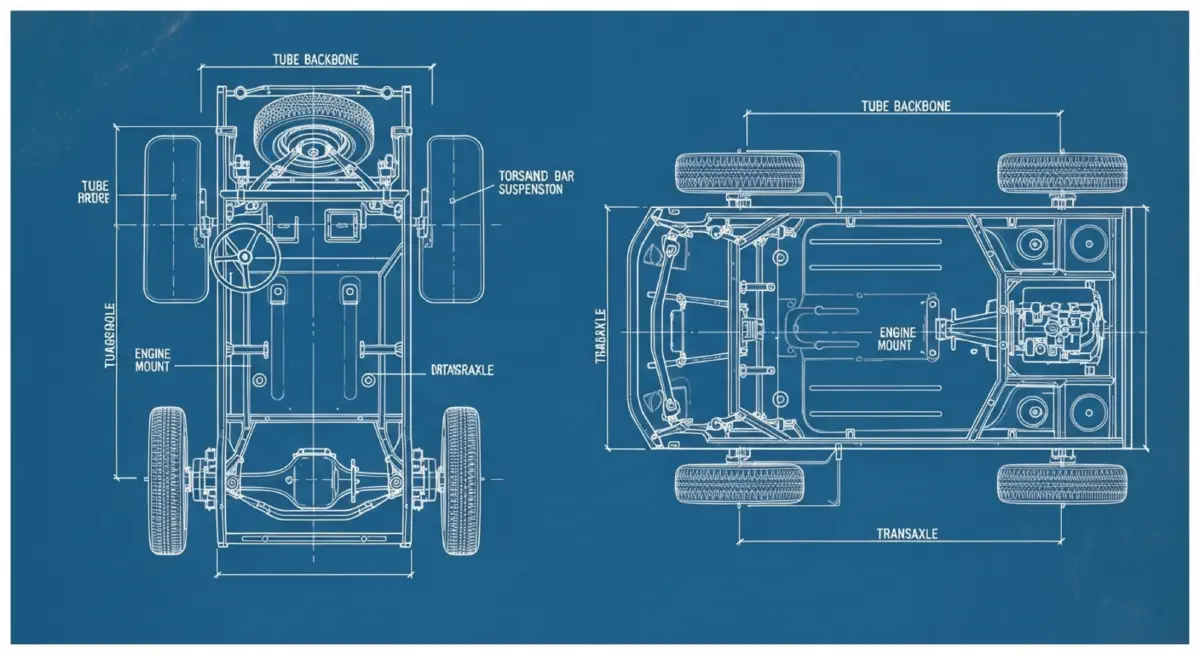
The Wehrmacht attempted to streamline its motor pool before the war through the Einheits-PKW (Standardized Passenger Car) program, which aimed to create a uniform family of light, medium, and heavy off-road vehicles. These models, such as the Stoewer M12 and BMW 325, were technically brilliant, featuring high ground clearance and complex four-wheel steering to ensure superior cross-country mobility. However, this focus on technical performance resulted in vehicles that were too heavy and too difficult to maintain for the average squad, leading to a situation where the specialized nature of the Stoewer R200 became a liability rather than an asset. The implication of this over-engineering was a fleet that performed excellently on the testing grounds of Germany but suffered a catastrophic decline in readiness when exposed to the primitive infrastructure of the occupied East.
Civilian Requisitioning and Luxury-Tier Fragility#
As production of standardized military vehicles failed to meet the growing demands of a multi-front war, the German military was forced to requisition thousands of civilian cars from the domestic economy. This influx brought models like the Opel Kadett, Opel Olympia, and the powerful Opel Admiral into military service, none of which had been designed for the rigors of frontline combat. High-ranking officers frequently utilized luxury platforms such as the Mercedes-Benz 320 or the Adler Diplomat, which required specialized lubricants and precision-machined parts that the standard logistics system could not reliably provide. This reliance on civilian hardware generated a continuous friction within the maintenance units, as the time required to keep a BMW 335 operational was time stolen from the repair of essential combat transport.
The Volkswagen Series: A Rare Path to Simplification#
Contrasting with the expensive complexity of the Horch 901 and Wanderer 901, the development of the Volkswagen Type 82 Kübelwagen provided the Wehrmacht with its most successful light utility platform. Based on the simple air-cooled engine of the early Beetle, the Kübelwagen bypassed the maintenance-heavy water cooling systems of its peers, allowing it to function reliably in both the extreme heat of the desert and the freezing winters of the Eastern Front. The subsequent Volkswagen Type 166 Schwimmwagen further expanded this utility by adding amphibious capability, yet it maintained a degree of mechanical simplicity that remained the exception rather than the rule in the German fleet. This strategic pivot toward ruggedness demonstrated that the most effective tool in a war of attrition was not the one with the highest technical specification, but the one that could be repaired with a hammer and a wrench.
Captured Vehicles as Logistical Poison#
The rapid expansion of the Wehrmacht necessitated the integration of captured motor pools from every occupied territory, ranging from the French Peugeot 202 to the Czech-built Tatra 57. While these acquisitions allowed divisions to maintain their motorized status on paper, they introduced a "logistical poison" by multiplying the number of unique parts needed in the field. A single command unit might find itself operating a Steyr 1500A alongside a captured Laffly S15, necessitating two separate sets of technical manuals and incompatible toolkits for even basic repairs. This heterogeneity meant that the sheer volume of "cars" available was often an illusion of strength, as a significant percentage was always sidelined by the absence of a single, country-specific gasket or spark plug.
Heavy Personnel Carriers and the Industrial Middle Ground#
Heavy personnel carriers like the Horch 108 and the Ford Type EG were designed to carry full squads or serve as mobile command centers, occupying a middle ground between passenger cars and light trucks. These vehicles, including the specialized Krupp Protze (configured as the KFZ 69 or KFZ 70), were essential for towing light artillery and anti-aircraft guns. However, their size and weight often made them vulnerable in soft ground, and their bespoke chassis meant they could not easily share parts with the Opel Blitz trucks that followed them. The persistence of these heavy car designs, rather than a move toward a unified truck-based platform, further fragmented the industrial base and prevented the benefits of mass production from reaching the front lines.
Specialized Luxury Vehicles and the Detachment from Reality#
At the extreme end of the spectrum, the use of ultra-luxury vehicles like the Maybach SW38 and the supercharged Mercedes-Benz 770 for state functions and high-level command illustrated a systemic detachment from logistical reality. These machines were the pinnacle of German automotive engineering, featuring armored plating and high-speed engines designed for the Autobahn, yet they were entirely dependent on the domestic factory service network for survival. When these vehicles moved with headquarters units into the Soviet Union, they became an enormous drain on resources, requiring dedicated technicians and specialized fuel that was often in short supply. The presence of these "parade cars" in a theater of total war served as a metaphor for the entire German motorization strategy: a commitment to prestige and performance over the boring but necessary requirements of sustainability and standardization.
The Legacy of Fragmentation#
The ultimate failure of the Wehrmacht's passenger car fleet was the triumph of engineering variety over industrial logic. The persistence of the "complexity tax" ensured that while the German army had a car for every specific role, it rarely had the parts to keep any of them moving. This systemic fragility was not an accidental oversight but a direct consequence of a culture that celebrated technical virtuosity as an end in itself, even when it actively undermined operational capability. The lesson extends far beyond the historical context of World War II: it serves as a stark reminder that in any large-scale system—whether military, industrial, or technological—the pursuit of diversity without standardization is a direct path to paralysis.
A photo gallery of