
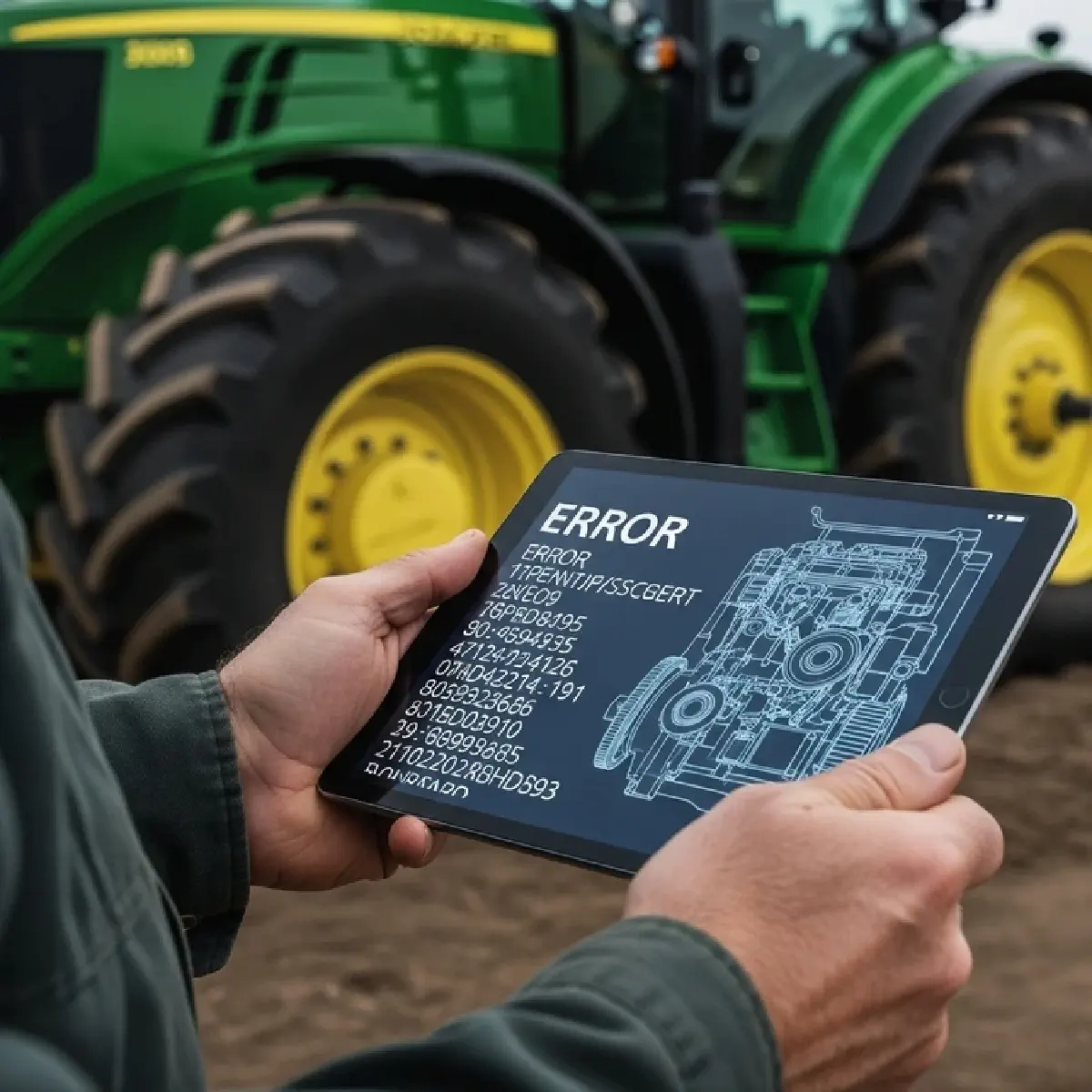
John Deere tractor owners in the American heartland are not typical revolutionaries. But in 2015, they became the vanguard of a modern rebellion. After purchasing a high-tech tractor for over $300,000, farmers found they could not perform basic repairs. A faulty sensor or a clogged fuel injector would trigger a cascade of software errors, locking the machine into “limp mode.” The only fix was a proprietary diagnostic software tool, available exclusively to authorized Deere dealerships. Waiting for a dealer could cost a farmer thousands in lost productivity during a critical planting or harvest window.
This was not a malfunction. It was a deliberate business strategy. Manufacturers like John Deere, Apple, and major automakers had begun embedding software locks and digital rights management (DRM) into physical products. The era of owner sovereignty was ending. The right to repair—the foundational idea that you own and can maintain what you buy—was being redefined as a digital privilege, granted or revoked by the manufacturer. The wrench had met the whitelist, and the wrench was losing.
This conflict marks a fundamental shift in the economics of ownership. For centuries, the durability and repairability of tools were intrinsic to their value. Today, value is increasingly extracted not from the initial sale, but from controlling the entire lifecycle of the product. The fight over a tractor’s diagnostic code or a smartphone’s battery is a battle over who profits from the lifespan of a machine. It is a war being waged in farm fields, repair shops, and courtrooms, with outcomes that will determine whether we own our possessions or merely license them.
The Architecture of Lockdown#
The technical mechanisms of this lockdown are diverse but share a common goal: to make independent repair impractical, illegal, or impossible. The most direct method is physical design. Devices are glued together rather than screwed, using proprietary fastener heads like the Apple Pentalobe. Batteries and screens are fused into single assemblies, so replacing one broken component requires purchasing several others.
More insidious is the software barrier. Modern vehicles and equipment contain dozens of electronic control units (ECUs). Replacing a simple part like a headlight or a window motor often requires the new component to be “paired” to the vehicle’s central computer using manufacturer-only software. This process, sometimes called “initialization” or “coding,” turns a five-minute mechanical swap into a task that can only be completed at a dealership. The part itself is generic; the digital permission to use it is not.
The final weapon is the legal and contractual bludgeon. Manufacturers assert that accessing diagnostic software or bypassing digital locks violates the Digital Millennium Copyright Act (DMCA) and void warranties. They claim that their software—including the code that manages a tractor’s hydraulics or a car’s braking system—is a copyrighted work, and circumventing it is piracy. This framing transforms a farmer fixing his own tractor into a potential copyright infringer.
The Economic Engine of Inaccessibility#
The motivation for this repair blockade is not technical elegance or safety—it is a calculated profit maximization strategy. The global market for repair parts and services is worth over $1.5 trillion. By walling off this aftermarket, manufacturers create a captive customer base.
Authorized dealers and service centers charge a significant premium. A study by the US Public Interest Research Group found that out-of-warranty repairs at manufacturer-authorized shops can cost up to 65% more than the same repair at an independent shop. For manufacturers, this creates a high-margin, recurring revenue stream long after the initial sale. It also funnels used devices and vehicles back into their certified refurbishment programs, allowing them to capture value from the second and third lifecycles of their products.
This model represents a peak of vertical integration, where a single company controls not just the production of a good, but every profitable interaction with it throughout its usable life. The consumer transitions from an owner to a lessee in perpetuity, paying for access and function rather than acquiring a tool. The promise of efficiency and innovation is used to justify a radical concentration of market power over maintenance and modification.
The First Front Line#
The initial backlash did not come from consumers, but from the professional repair ecosystem—the independent mechanics, the IT repair shops, the hospital biomedical technicians. They found their livelihoods threatened by error codes they could not read and parts they could not authenticate. A 2021 report by the US Federal Trade Commission noted that these restrictions often have no legitimate justification related to safety, security, or intellectual property.
They simply stifle competition.
Farmers, unable to wait days for a dealer technician during harvest, took matters into their own hands. They turned to Ukrainian firmware hackers who cracked John Deere’s software locks, creating illicit diagnostic tools that spread through forums and thumb drives across the Midwest. This black market for repair software proved a desperate demand existed. It also revealed the absurdity of the situation: American farmers were relying on Eastern European hackers to exercise basic property rights over equipment sitting in their own fields. The war was declared not by activists, but by the logical endpoint of a broken system. The battlefield was set, and the next fronts would involve everything from luxury sedans to life-saving hospital ventilators.