
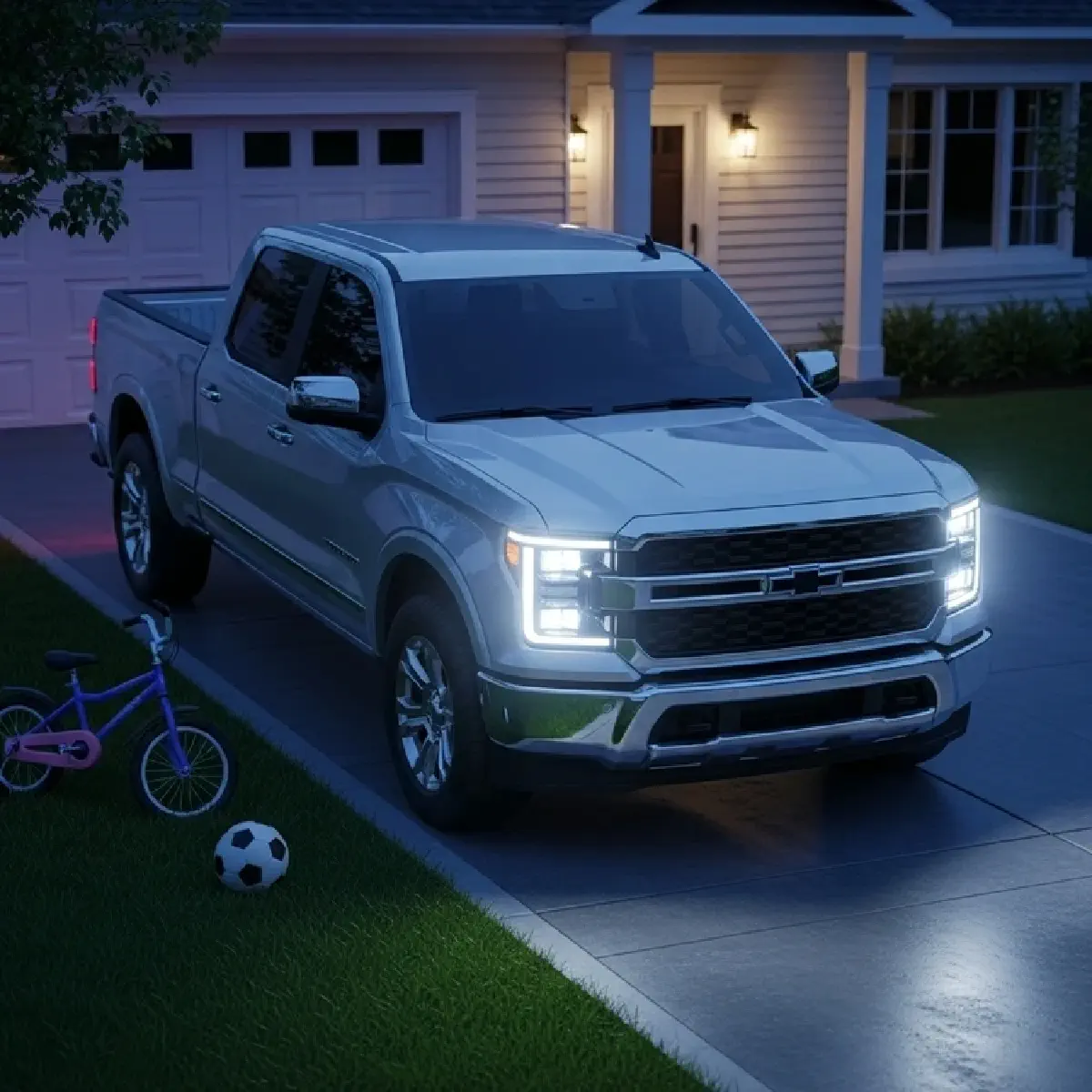
The pickup’s protected evolution reached a tipping point in the 1990s. The launch of the 1994 Dodge Ram was a seismic event. It replaced the rounded, humble lines of its predecessor with a massive, vertical grille, flared fenders, and a towering, aggressive stance. It looked less like a truck and more like a Peterbilt semi. This was not an engineering necessity; it was a design revolution. Dodge sold not just capability, but an in-your-face, masculine aura. Sales tripled almost overnight.
The Ram’s success triggered a full-scale styling arms race. Ford responded with the iconic, brawny lines of the 1997 F-150. Chevrolet countered with the sharper, muscular silhouette of the 1999 Silverado. Hoods grew higher, grilles became bolder, and body lines deepened. This shift from function to form was deliberate. As personal-use purchases began to outnumber work-truck purchases, the vehicle’s visual signaling became its primary selling feature. It was no longer enough to be capable; a pickup had to look invincible.
This aesthetic shift was underpinned by a technological one: the move to premium interiors. By the early 2000s, top-trim pickups like the Ford King Ranch or GMC Denali offered heated leather seats, woodgrain accents, premium audio systems, and complex infotainment suites. The cacophony of the diesel engine was now insulated by layers of sound-deadening material. The pickup cabin transformed from a utilitarian cockpit into a mobile executive lounge, directly challenging the luxury sedan for comfort and amenity.
The Psychology of the Command Throne#
The interior redesign centered on one psychological principle: the command seating position. Engineers raised the H-point (the driver’s hip) higher than in any passenger car. This achieved two things. First, it provided a literal overview of traffic, feeding a powerful sense of safety and control. Second, it created a psychological hierarchy on the road. To sit in a modern pickup is to look down onto the roofs of sedans and crossovers.
This sensation is not an accident; it’s a core product feature. Market research consistently showed that feelings of security and dominance were primary purchase drivers for non-commercial buyers. The vehicle’s imposing exterior, therefore, was mirrored by an interior designed to make the driver feel imperious. The “work truck” had mastered the deep-seated consumer psychology of perceived safety and status, offering a rolling fortress mentality for the daily commute.
This appeal proved extraordinarily potent. The pickup shed its blue-collar image and was adopted by suburban professionals who might never load more than a bag of mulch. It became a blank canvas for personal identity: the outdoorsman’s basecamp, the family’s road-trip vehicle, the symbol of self-reliant success. Its versatility was a selling point, but its true function was symbolic expression. The truck’s bed, increasingly unused for hard labor, became a metaphor for potential—the potential for a lifestyle its owner aspired to, if not actually lived.
The Alchemy of High Margins#
The financial logic behind this upmarket push was irresistible. While a mid-size sedan might net a few hundred dollars in profit, a fully-loaded crew-cab pickup could deliver $10,000 to $15,000 in profit per vehicle. For Detroit’s automakers, pickups became profit engines that subsidized everything else—from the development of electric vehicles to the sale of low-margin compact cars.
This alchemy transformed corporate strategy. Manufacturers funneled capital into new pickup plants and V8 engine development. Marketing budgets for truck lines dwarfed those for cars. The pickup was no longer just a product line; it was the financial core of the American auto industry. This created a powerful internal inertia. Any regulatory threat to the pickup’s favorable treatment (like tightening CAFE standards for light trucks) was met with fierce, well-funded lobbying. The industry’s health became inextricably linked to the continuous, unfettered sale of ever-larger, more luxurious trucks.
The arms race, therefore, was not just between Ford, GM, and Ram. It was between the industry and the limits of physics, economics, and regulation. Each generation had to be more powerful, more luxurious, and more visually dominant to justify higher price points and protect those legendary margins. The humble pickup had been weaponized by corporate strategy, its evolution now dictated by spreadsheets in Detroit boardrooms as much as by the needs of ranchers in Texas.