
The lease lifecycle has been a powerhouse of profit and predictability for automakers, but its externalities ripple across the economy and environment. The most direct consequence is the systematic devaluation of long-term ownership. By making new cars perpetually accessible, leasing has accelerated the depreciation of all vehicles. A five-year-old car today competes not only with other five-year-old cars but with the psychological allure of a new, leased vehicle for a similar monthly cost. This erodes the value proposition of keeping a car for a decade.
This acceleration fuels a disposable consumption model. The average age of vehicles on American roads has steadily risen to over 12 years, but this statistic masks a bifurcation: a fleet of long-keepers and a rapidly churning segment of lease vehicles. The constant churn increases total resource consumption. Energy and materials used in manufacturing—which account for 20-40% of a vehicle’s lifetime carbon footprint—are expended more frequently per driver over time. The lease model, while not the sole cause, acts as a hidden accelerant for material throughput in the economy.
Furthermore, the system’s design has environmental consequences disguised as efficiency. Off-lease cars, often in good condition, are frequently shipped en masse from wealthy leasing regions (like the US Northeast) to developing markets in Africa, the Middle East, and Eastern Europe. This exports later-stage maintenance and emissions problems while providing affordable mobility. It’s a complex trade and supply chain that externalizes the vehicle’s end-of-life phase, delaying the final reckoning with its disposal.
The Electric Shock to the System#
The rise of electric vehicles (EVs) is exposing critical flaws in the leased-lifecycle machine. The cornerstone of leasing—the residual value—is terrifyingly volatile for EVs. Rapid technological improvement, uncertainty over battery longevity, and fluctuating government incentives make predicting an EV’s value in three years a gamble. Early lessors of EVs like the Nissan Leaf faced catastrophic residual value losses, a lesson the industry remembers.
Automakers have responded with two strategies. First, they are using their captive finance arms to absorb the risk, offering artificially attractive leases to push EV adoption, effectively subsidizing them through their banking divisions. Second, they are exploring the lease-like subscription model even more aggressively for EVs, as it allows them to retain ownership of the battery pack—the most valuable and uncertain component. This turns the car into a true utility, with the company maintaining control over the asset’s core.
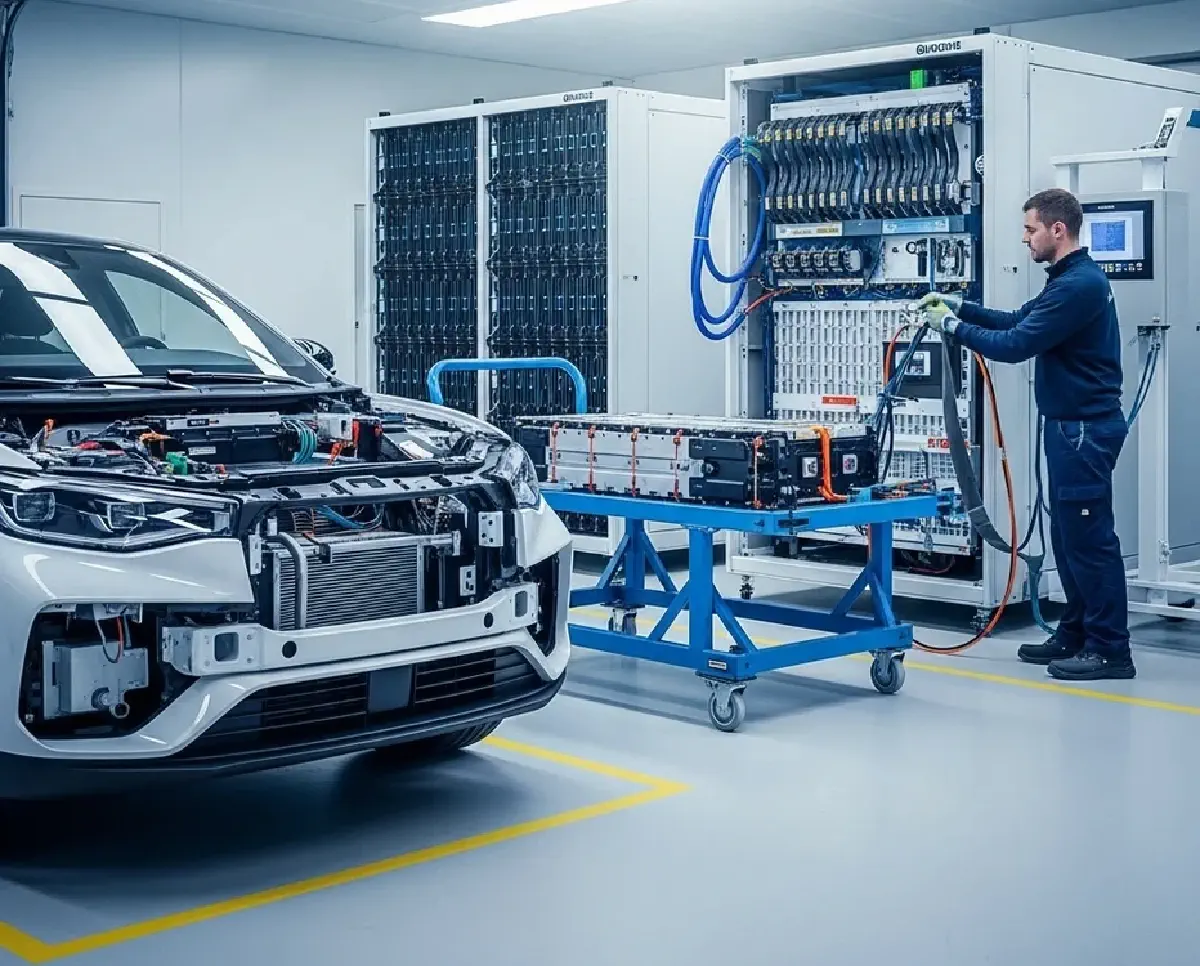
Perhaps the most significant disruption is the potential decoupling of the vehicle from its powertrain. With battery technology evolving separately from vehicle design, the traditional model of a car aging as a monolithic unit breaks down. A leased EV returned with a degraded battery is a liability. But if the automaker owns it, they can refurbish or repurpose the battery for second-life energy storage, creating a new revenue stream and propping up the residual value. The lease model, therefore, may be the key that unlocks sustainable EV battery circularity.
Policy, Power, and the Road Ahead#
The lease system concentrates power. It strengthens captive finance arms, making automakers more like banks with car factories attached. This influences policy, as these powerful entities lobby for regulations that favor asset-backed securities and leasing tax structures. Consumer protection policy, too, lags behind, often failing to address the complexities of early termination, wear-and-tear charges, and mileage penalties that can trap lessees.
The system also has a social equity dimension. Leasing often requires higher credit scores and ties up consumers in perpetual payment cycles without building equity. It can be a more expensive long-term path to mobility than prudent ownership, a cost disproportionately borne by those stretching to afford a newer, safer vehicle.
Re-Engineering the Cycle#
The lease lifecycle is a brilliant, self-perpetuating system of innovation in financial engineering. It applies systems thinking to create a closed loop of production, consumption, and remarketing. However, its optimization for short-term corporate profit and consumer convenience has generated significant externalities across trade and supply chains and has been shaped by a policy and critique landscape that favors corporate liquidity.
Its future hinges on its adaptation to the electric age. Can this financial engine be retooled to promote sustainability—by ensuring battery circularity and encouraging right-sized vehicle use—or will it simply accelerate the consumption of next-generation vehicles? The answer lies in whether regulators, consumers, and automakers begin to account for the full, systemic cost of the three-year car, or remain content to simply keep the monthly payments rolling in. The machine is perfectly designed; we must now decide if it’s producing the outcomes we actually want.