
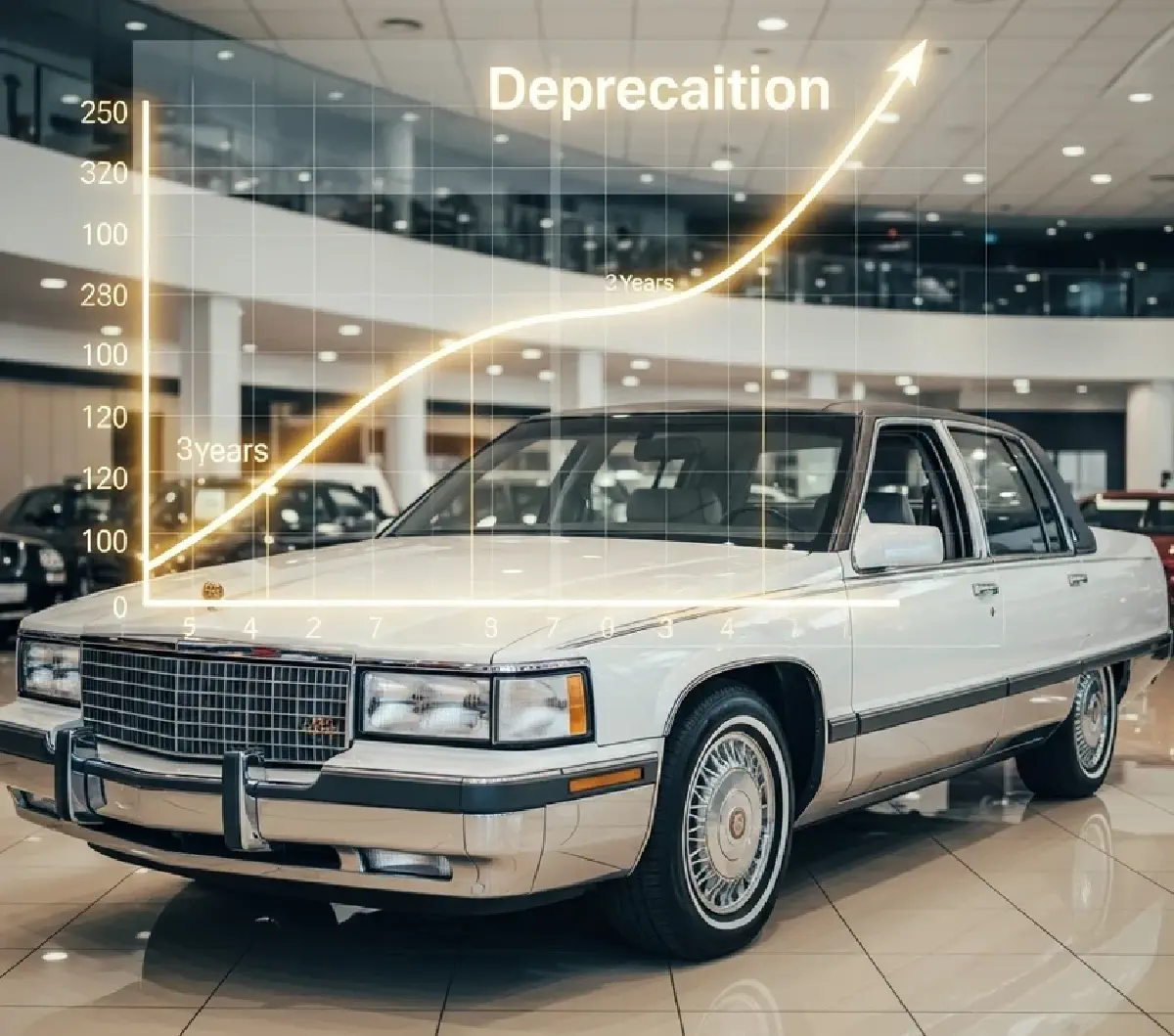
In the early 1990s, a quiet revolution began not on the factory floor, but in the financial offices of General Motors. The company was reeling from the success of Japanese imports—cars renowned for their reliability that owners kept for years, starving GM of new sales. Their solution was not to build better cars, but to invent a new way to sell them. In 1992, GM launched GMAC SmartLease, a program that radically simplified vehicle leasing and marketed it directly to mainstream consumers.
The premise was seductively simple: pay for only a portion of the car’s value—its steepest initial depreciation—over three years, then simply hand it back. Monthly payments plummeted by 25-30% compared to a loan. Overnight, a new Cadillac or Buick became as affordable monthly as a well-equipped Toyota. The strategy was a staggering success. By 1996, leases accounted for over 30% of all GM’s retail deliveries, pulling sales forward and locking customers into a perpetual upgrade cycle.
This was not merely a new financing option. It was the activation of a financial feedback loop that would permanently alter the automotive ecosystem. Leasing transformed the car from a durable good into a subscription service, shifting industry focus from engineering for longevity to managing for predictable, time-based depreciation. The vehicle’s lifecycle was no longer determined by mechanical wear, but by the terms of a contract. The 3-year car was invented not by engineers, but by accountants.
Decoding the Financial Alchemy#
The core innovation of modern leasing is the Residual Value. This is the lender’s forecast of what the vehicle will be worth at the end of the lease term, typically 36 months. This single number is the linchpin of the entire system. The monthly payment is calculated as: (Vehicle Price - Residual Value) / Lease Term, plus interest.
Automakers and their captive finance arms (like GMAC, Ford Credit) gained a powerful lever: they could artificially inflate the residual value. A higher residual meant a lower monthly payment, making the car more “affordable” and attractive to lease. The risk—that the car would be worth less than predicted at lease-end—was a future problem. In the short term, it moved metal. This practice created a subsidy from the finance arm to the sales division, using projected future money to sell cars today.
This system required a new kind of expertise. Automakers became masters of depreciation forecasting, employing armies of data analysts to predict used-car values three years out. The goal was no longer just to build a good car, but to build a car that would depreciate in a predictable, controlled manner. Unpredictable resale value was the enemy of a stable leasing business.
Building the Captive Captive Ecosystem#
The leasing boom was enabled by the rise of “captive” finance companies—banks owned by the automakers themselves. Before their dominance, independent banks viewed leasing as a niche, risky product. Captive financiers had different incentives. Their primary mission was not pure profit on the loan, but to facilitate the sale of new vehicles and ensure customer retention.
This vertical integration created a closed loop. The factory built the car. The captive financier leased it with favorable terms. After 36 months, the car was returned to the same financier, who then controlled its fate in the used vehicle market. They could funnel the best cars into their own certified pre-owned (CPO) programs, creating a profitable second sales cycle with warranties that mirrored the new-car experience. The customer, now accustomed to a new car every three years, was often guided directly into another lease. The system was designed for inertia.
The Psychological Lock-In of the Upgrade Cycle#
Leasing engineered a profound shift in consumer psychology. It replaced the ownership ethic—the pride in maintaining an asset over a long period—with an upgrade ethic. The message shifted from “buying a car” to “acquiring a level of mobility.” Regular consumers could now access vehicles that were previously financially out of reach, trading long-term equity for short-term experience.
This created a powerful happiness treadmill. The thrill of a new car, with its latest technology and pristine condition, was renewed every three years. The burdens of long-term maintenance, major repairs, and the social stigma of driving an “old” car were eliminated. The lease contract effectively outsourced the risk of unexpected depreciation and repair costs to the finance company. For the consumer, it felt like a safer, simpler bet—a monthly fee for worry-free, modern transportation.
By the turn of the millennium, this system was firmly entrenched. The automotive industry had built a new engine for growth, one powered by financial instruments and psychological hooks rather than just internal combustion. But this engine required constant, careful management. The artificial pulse it sent through the market would soon create powerful, unintended vibrations across the entire global system of how cars are built, sold, and discarded.