
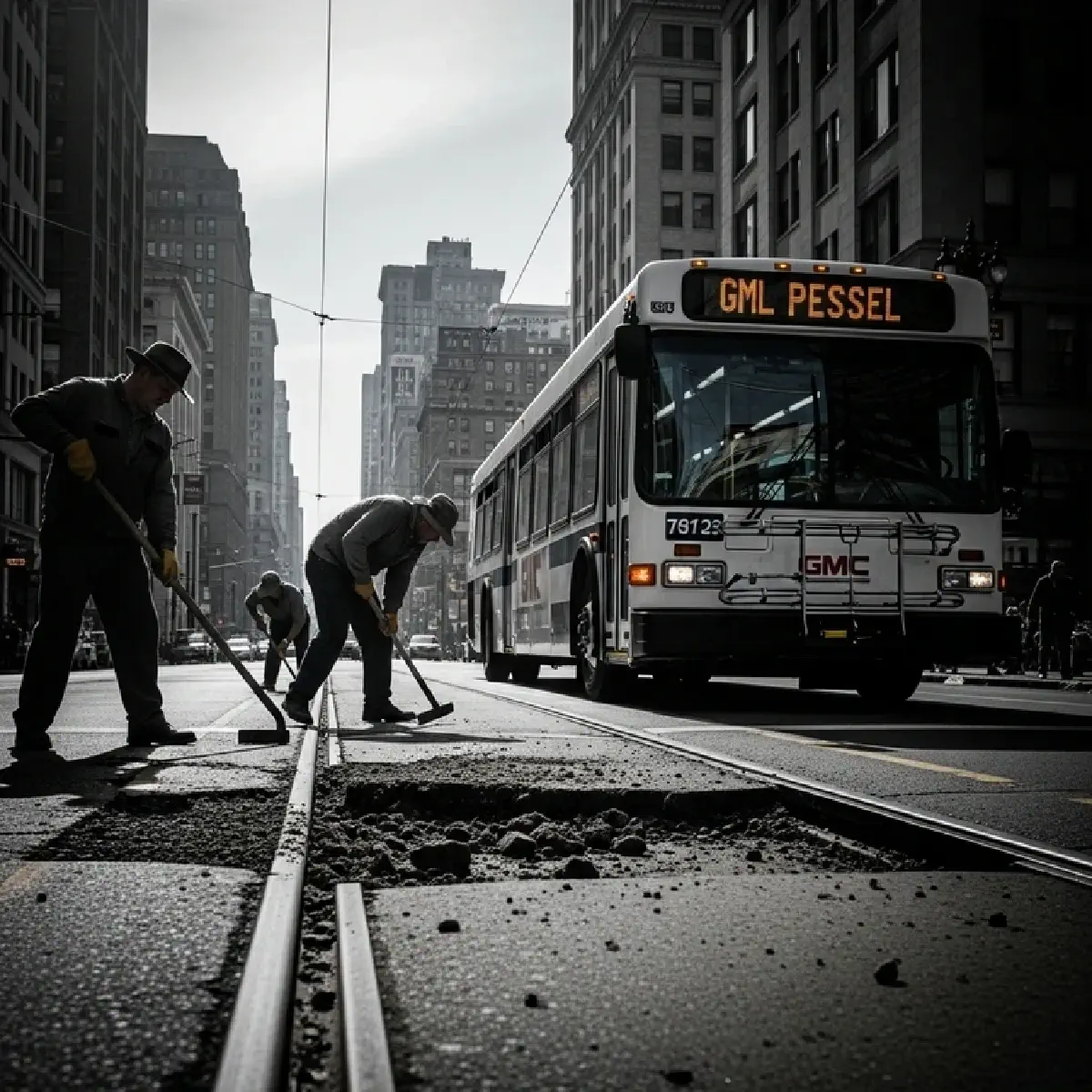
The story of the streetcar’s demise is often framed as a natural death—an outdated technology succumbing to the superior automobile. The truth is a more active unraveling, a tale of industrial power exploiting financial weakness. At the center sits National City Lines (NCL), a holding company funded and controlled by a consortium including General Motors, Firestone Tire, Standard Oil of California, and Phillips Petroleum.
From the late 1930s through the 1950s, NCL embarked on a systematic campaign. It purchased over 100 electric streetcar systems in 45 cities, including major networks in Los Angeles, Philadelphia, Baltimore, and St. Louis. The promise was modernization. The reality was methodical dismantling. NCL would rip out the tracks, tear down the overhead wires, and replace the quiet, electric streetcars with GM-built diesel buses.
This was not a conspiracy in shadows; it was a vertical integration strategy executed in the open. GM sold the buses. Firestone sold the tires. Standard Oil and Phillips sold the diesel fuel. The consortium wasn’t buying transit companies to run them; it was buying them to create a new, locked-in market for its products. The streetcar, which could run on any utility’s electricity, was replaced by a bus dependent on their specific petroleum derivatives. It was a masterstroke of creating dependency.
The Legal Facade and the Real Crime#
In 1949, the United States Department of Justice secured criminal convictions against General Motors, National City Lines, and their co-conspirators for antitrust violations. They were found guilty of conspiring to monopolize the sale of buses and related products to local transit companies. The court fined GM a mere $5,000. The corporate officers were fined $1 each.
The penalty was a symbolic slap. The deed was done. The streetcar networks were already destroyed, their infrastructure sold for scrap. The legal focus on the sale of buses missed the larger, more consequential crime: the destruction of a permanent, electric mobility infrastructure and its replacement with a less efficient, pollutant-dependent system. The court addressed a narrow commercial conspiracy but was blind to the societal and systemic externalities being set in motion—the air pollution, urban sprawl, and transit poverty that would follow.
The replacement technology, the diesel bus, was inferior in key aspects. Buses were louder, dirtier, less comfortable, and, critically, lacked the fixed-rail permanence that encouraged dense, transit-oriented development. A streetcar line represented a permanent public investment around which businesses and housing could securely form. A bus route was just a line on a map, subject to change at an administrator’s whim. The consortium didn’t just replace a vehicle; it replaced a place-making infrastructure with a flexible service, fundamentally altering the economic geography of cities.
The Coercive Cycle of Decline#
The conversion to buses accelerated a coercive cycle of transit decline. As rail systems were torn out, service often deteriorated. The less pleasant and reliable bus service drove ridership down, reducing fare revenue. With less revenue, maintenance was deferred, and service cuts followed, pushing more riders into cars. This reinforced the political narrative that “no one rides transit anymore,” justifying further disinvestment and more highway spending.
This cycle was a direct result of the financial and power structures established earlier. City planners and highway engineers, flush with gasoline tax dollars, now designed urban landscapes for cars. Wide boulevards replaced narrow streets, making streetcar operation more difficult. Zoning codes mandated vast seas of free parking, subsidizing car storage while offering nothing for transit riders. The physical city was being re-engineered to validate the automotive investment.
The public, sold on the promise of personal freedom and speed, largely embraced this change. The streetcar, once a symbol of modern urban progress, was recast as old-fashioned, slow, and in the way. Its demise was framed as progress. What was lost was not just a technology, but a viable choice—a path not taken that locked metropolitan regions into a single, hydrocarbon-fueled mode of mobility. The gasoline tax pact had funded the roads, and industrial power had cleared them of their most significant competitors. The stage was now set for the total domination of the automobile and the crises that would follow from having no alternative.