
The Gasoline Tax Pact: How America Fueled Cars and Stranded Transit
Key Insights#
- The 1919 gasoline tax created a user-pays funding model that exclusively supported road building, creating a financial asymmetry that favored automobiles over transit and led to the systematic dismantling of streetcar systems.
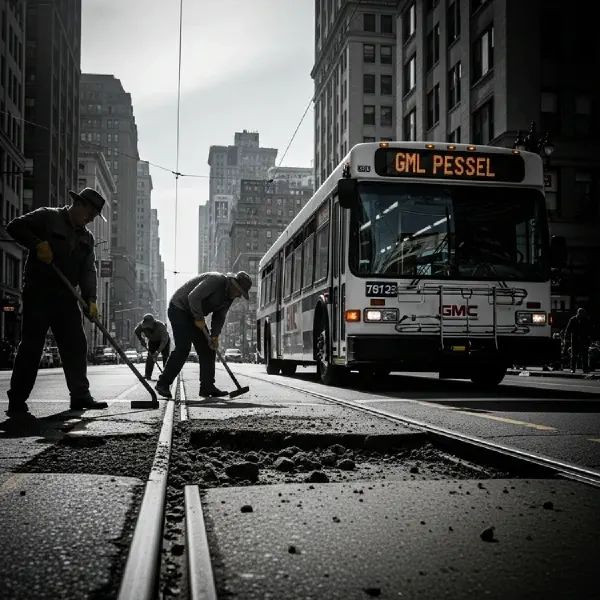
- National City Lines, backed by GM and oil companies, purchased and converted over 100 streetcar networks to buses, creating a criminal monopoly that replaced efficient electric transit with petroleum-dependent buses.
- The resulting auto-dependent urban sprawl generated massive externalities including air pollution, traffic fatalities, social isolation, and economic fragility, while creating path dependence that made transit alternatives seem impractical.
- The gasoline tax pact engineered a vicious cycle where road funding drove car dependency, which increased gas tax revenue, which funded more roads, leaving cities with hollowed-out cores and unsustainable infrastructure costs.
- Modern attempts to rebuild transit face the legacy of this path dependence, with electric vehicles potentially perpetuating the same systemic issues unless funding models and urban forms are fundamentally restructured.
References#
- Norton, P. D. (2008). Fighting Traffic: The Dawn of the Motor Age in the American City. The MIT Press.
- Snell, B. C. (1974). American Ground Transport: A Proposal for Restructuring the Automobile, Truck, Bus, and Rail Industries. Report presented to the Subcommittee on Antitrust and Monopoly of the Committee on the Judiciary, United States Senate.
- Bottles, S. L. (1987). Los Angeles and the Automobile: The Making of the Modern City. University of California Press.
- Jackson, K. T. (1985). Crabgrass Frontier: The Suburbanization of the United States. Oxford University Press.
- U.S. Department of Justice. (1949). United States v. National City Lines, Inc., et al. (Criminal Action No. 532).
- The Highway Trust Fund Explained. (2021). Congressional Budget Office.
- Federal Highway Administration. (2017). Highway History: The 1919 Motor Transport Corps Convison.
- Schrag, Z. M. (2006). The Great Society Subway: A History of the Washington Metro. Johns Hopkins University Press.
- Brown, J. R., & Thompson, G. L. (2014). The Rise and Fall of American Streetcars. Transportation Quarterly, 68(3).
- Melosi, M. V. (2000). The Sanitary City: Urban Infrastructure in America from Colonial Times to the Present. Johns Hopkins University Press.