But Mexico is not the only failure mode. There is another, more deceptive path to stagnation. It looks like ambition. It feels like national pride. And it ends in the same place: a middle-income trap with nothing to show for decades of effort.
That path is captured protectionism, and Malaysia is its most instructive example.
The Malaysian Dream: A National Car#
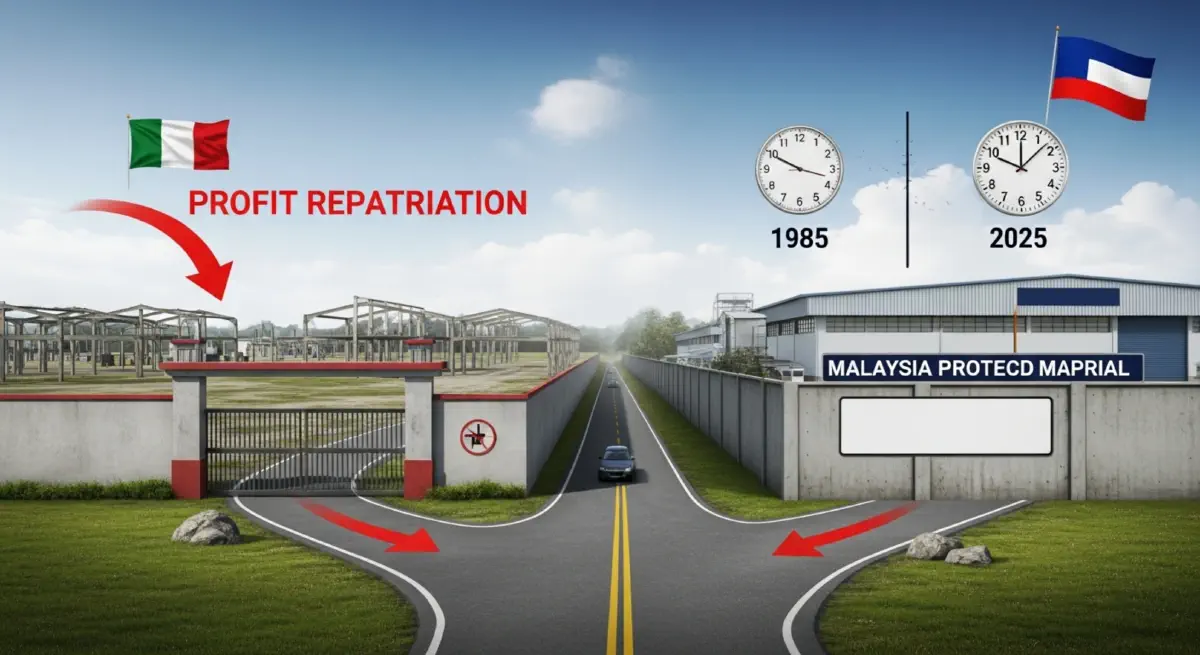
In 1985, under the iron will of Prime Minister Mahathir Mohamad, Malaysia launched Proton, its first “national car.” The vision was bold: a developing, majority-Muslim country would design, manufacture, and export its own automobiles. No longer would Malaysia be a mere assembler of foreign brands. It would be an industrial power.
To achieve this, the government built a wall of protection:
- Tariffs on imported cars as high as 300%
- Tax exemptions and subsidies for Proton
- An import permit system (APs) that gave politically connected Bumiputra entrepreneurs the right to bring in foreign cars, at a profit
- Local content rules that forced Proton to buy from domestic suppliers, many of them newly created Bumiputra firms
For a while, it worked. Proton captured nearly 80% of Malaysia’s small domestic market. Thousands of vendors emerged. A whole industrial ecosystem, built around the national car, came to life.
But beneath the surface, something was rotting.
The Rot: Rent-Seeking, Complacency, and Political Capture#
Protection without performance is poison. And Malaysia’s protection came with no strings attached.
Proton had no reason to export, meet global quality standards, or innovate. Why would it? The domestic market was a captive audience, and foreign cars were priced out of reach by tariffs and excise duties.
Meanwhile, the vendor development program became a patronage machine. Suppliers were chosen not for their competence, but for their political connections and their ethnicity. The Bumiputra agenda, born from Malaysia’s affirmative action policies, overrode efficiency. If you were the right kind of Malay with the right political patron, you got a contract. Quality and cost were secondary.
The Approved Permit (AP) system became a pure rent-seeking vehicle. A handful of politically connected individuals received permits to import foreign cars tax-free. They sold those permits, sometimes for RM30,000 each, to dealers who then passed the cost to consumers. The AP holders did not build anything. They just collected checks. And when the government tried to phase out the AP system, it found itself facing a wall of political resistance. Because AP holders were also political financiers.
Proton itself was run not by professional managers, but by political appointees. Mahathir and his circle directly influenced strategy, R&D choices, and even model design. When Volkswagen offered a genuine partnership: access to cutting-edge platforms, global distribution, and technology sharing. Malaysia refused because it would have required ceding management control. National pride mattered more than competitiveness.
The Result: A Quarter-Century of Stagnation#
By 2016, Proton’s domestic market share had collapsed from nearly 80% to around 15%. Export volume was negligible, always less than 10% of production. The company had consumed an estimated RM14 billion or more in government support. Yet it could not produce a globally competitive car. Its models were rebadged versions of outdated Mitsubishis, Hondas, and Suzukis.
Perodua, Malaysia’s second national car, performed better, but only because it was effectively managed by its Japanese partner, Daihatsu. Perodua’s success was a testament to foreign management, not Malaysian industrial policy.
Malaysia did not become a plantation. But it became something equally trapped: a protected hothouse where political elites and their business allies extracted rents while the real work of industrial upgrading never happened.
Mexico vs. Malaysia: Two Faces of Stagnation#
Let’s put them side by side:
| Feature | Mexico (Plantation) | Malaysia (Captured Protection) |
|---|---|---|
| FDI role | High, dominant | Low, kept at arm’s length |
| Local ownership | Weak | Strong (nominal) |
| Protection level | Low (tariffs removed under NAFTA) | High (tariffs, excise duties, APs) |
| Rent-seeking | Moderate (tax breaks, labor exploitation) | High (AP permits, vendor patronage) |
| Technology transfer | Minimal | Minimal (Mitsubishi resisted) |
| Export competitiveness | Moderate (assembly for US market) | Very low |
| Domestic value retention | Low (~18%) | Moderate but declining |
| Political capture | Low to moderate | Very high |
Two different paths. Same destination: a middle-income country unable to break into high-value manufacturing.
What Both Failed to Do#
Mexico failed to demand performance from FDI. It gave away access without securing technology transfer, local linkages, or export mandates. The result: an extractive enclave.
Malaysia failed to link protection to performance. It shielded its national champion from competition but never forced it to export, to innovate, or to meet global standards. The result: a rent-sucking black hole.
Both countries, in their own ways, violated the same golden rule:
The Lesson for a Developing Country Today#
If you want to build an automotive industry, or any strategic manufacturing sector, you must navigate between these two cliffs.
On one side is the plantation cliff: open your market completely, and FDI will come, but it will take your labor and leave nothing behind.
On the other side is the capture cliff: protect your market completely, and local firms will grow complacent, political elites will extract rents, and you will never become competitive.
The narrow path between them is what we will model in the coming posts. It requires:
- Conditional protection: Tariffs and subsidies, but only for firms that meet export and technology transfer targets.
- Sunset clauses: Protection expires automatically unless performance improves.
- Competitive vendor development: Open bidding, not political patronage.
- Strong institutions: An autonomous bureaucracy insulated from short-term political pressure.
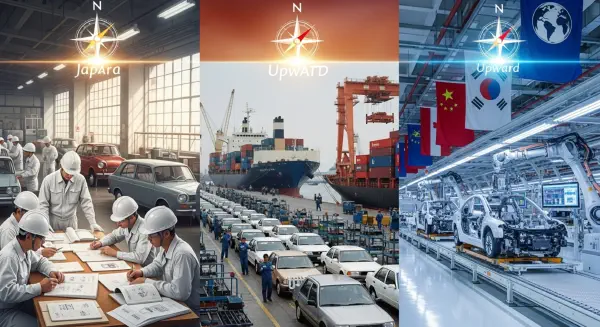
In the next post, we will look at the countries that actually walked this narrow path: Japan, South Korea, and China. Their success was not accidental. It was engineered.
Next post: “The East Asian Miracle – What Japan, Korea, and China Did Right”. We will distill the institutional and policy secrets of the only developing countries that successfully caught up in automobiles and electronics.