In 1990, the California Air Resources Board (CARB) issued a mandate that sent a shudder through every boardroom in Detroit, Stuttgart, and Tokyo. The mandate was simple: by 1998, 2% of all cars sold in California had to be "Zero Emission Vehicles" (ZEV). By 2003, that number had to be 10%. This was the "Second Automotive Revolution." For the first time since the 1900s, the electric vehicle was not a "city niche" or a "woman's car." It was a legal necessity.
The industry's reaction followed the established script. They produced "compliance cars"—half-hearted electric conversions of existing petrol models, like the GM EV1 or the Toyota RAV4 EV—and then used the "Pluto Effect" to kill them. They told the public that the range was too short, the batteries too heavy, and the charging too slow. They "marketed" the failure of the technology to justify the continuation of the petrol engine. They were right about the physics of the time, but they were wrong about the history. The electric car was not a new technology; it was a suppressed one.
The "Second Revolution" was not just about the engine. It was about the shift from "Atlantic Automobilism"—the Western model of high-speed, high-status, individual car ownership—to a global, and increasingly "Pacific," reality. As the markets in the U.S. and Europe reached "Peak Car"—the point where car ownership and distance driven per capita began to plateau or decline—the industry looked to the East.
In 2008, Ratan Tata announced the "Tata Nano," a $2,500 (~€1,800) car designed to "put India on wheels." It was supposed to be the new "People’s Car," the 21st-century equivalent of the Model T or the VW Beetle. It was a masterpiece of "frugal engineering," stripped of everything non-essential. It failed. It failed because the "Pluto Effect" in India was not about transport; it was about status. The Indian middle class did not want a "glorified rickshaw"; they wanted a "proper car"—a cocoon that signaled their arrival in the global elite. The Nano was "too cheap to succeed."
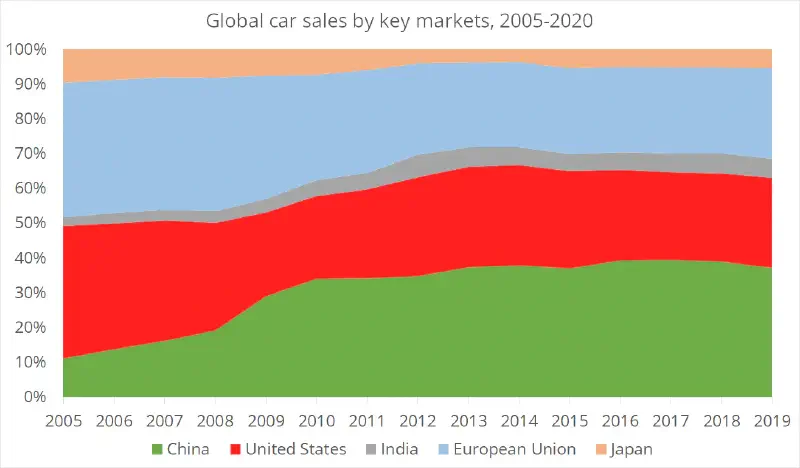
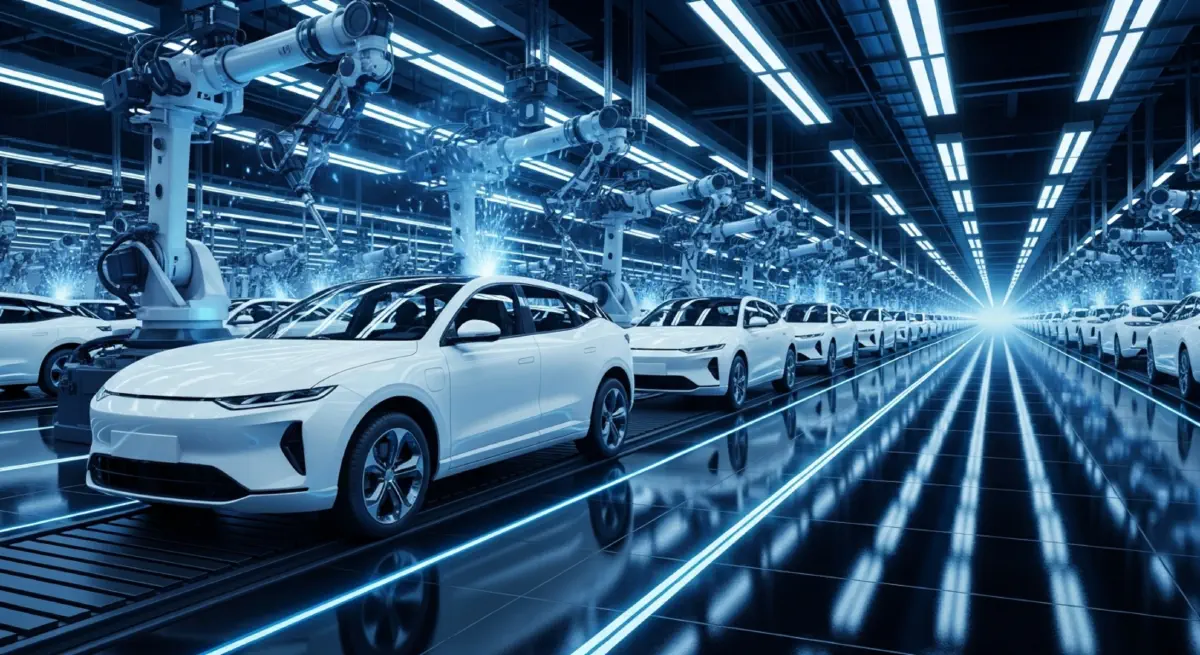
While the West was "scientifying" the luxury SUV, China was doing something different. China realized that it could never win the internal combustion game—the Western lead in engine technology was too great. Instead, they "leapfrogged" to the electric vehicle. By using massive state subsidies and a command economy, China became the world's leading producer of batteries and EVs. They transformed the car from a "mechanical masterpiece" into a "consumer electronic."
The "Electronic Revolution" of the 1970s had paved the way. Once the car was controlled by an ECU, the step to a fully electric drivetrain was a matter of substitution, not re-invention. The "Flower Model" of the car was being reconfigured. The "core"—the propulsion—was finally being replaced, but the "petals"—the user interface, the automation, the cocoon—were becoming more dominant than ever.
This is the "Second Revolution": the car is becoming a "mobile device." The modern EV is not a tool of "adventure" in the 1900s sense. It is an extension of the digital life. It is "automated" because the modern driver is "deskilled" and "distracted." The "scientification" of the car has reached its logical limit: the car no longer needs a driver at all.
But there is a shadow over this revolution. We are being told that the "Electric Revolution" will save the planet. This is the latest "technological fix." An electric SUV weighing 2,500 kg (~5,500 lb) is still an inefficient way to move a human being. It still requires a massive "carbon debt" to manufacture the batteries. It still requires the paving of the world. The "Pluto Effect" has locked us into a specific habit of mobility—the "private room on wheels"—and we are simply changing the fuel to keep that habit alive.
The history of the car is a history of "normal change" within a "failed system." We have reached "Peak Car" in the West not because we have run out of fuel, but because we have run out of space and time. The younger generation in London, Paris, and New York is "deskilled" by choice; they would rather have a smartphone and a transit pass than a 2,000 kg (~4,400 lb) liability parked on the street. The "socialization" of the car is reversing. It is moving from a symbol of "freedom" to a symbol of "encumbrance."
The "Pacific Plateau" is where we are now. The car is a global commodity, built in automated factories in Shanghai and Chennai, sold as a "service," and increasingly driven by an algorithm. The "Atlantic" era of the car—the era of Kettering, the era of the "adventure," the era of the "Mechanical Lie"—is over. We are left with a machine that is perfectly "scientified," perfectly "safe," and perfectly "silent."
The joke, of course, is that after a century of explosions, noise, and lead, we have finally built the car that the electric vehicle pioneers of 1900 told us we should have had all along. We just had to poison the world for a hundred years to prove they were right.