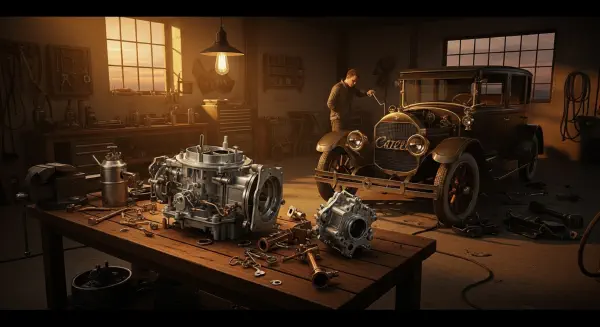
The internal combustion engine is a violent device. It operates by a series of controlled explosions that occur just inches from your legs. In the early 1900s, this was impossible to ignore. The car shook. It rattled. It leaked oil onto your shoes and blew blue smoke into your face. To drive was to be part of the machine, a constant participant in its struggle against the laws of thermodynamics. By the 1960s, however, the car had been transformed. It had become a "cocoon," a silent, climate-controlled capsule that isolated the passenger from the road, the weather, and the machine itself. This transformation was not an accident of comfort; it was the result of the "scientification" of automotive engineering—the systematic replacement of mechanical "feel" with mathematical "certainty".
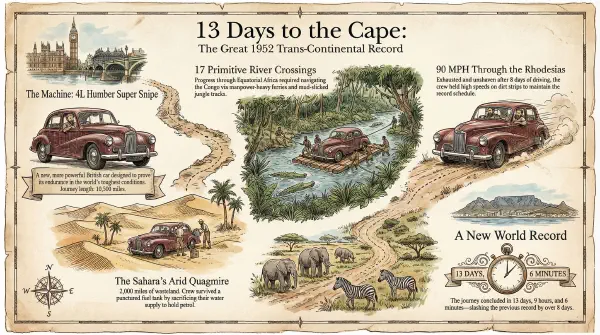
This process began when engineers stopped looking at the car as a collection of parts—the engine, the wheels, the frame—and started looking at it as a "system". In the first period of automotive history, there was no "automotive science." There were only mechanics who built what they thought would work. The car was "social" before it was "functional". It was an "affordance," a term used by psychologist James Gibson to describe how the properties of an object determine how it is used. The early car "afforded" adventure because its technical properties—high ground clearance, large fuel tanks, and simple (if unreliable) mechanics—made it suitable for the unpaved world outside the city.
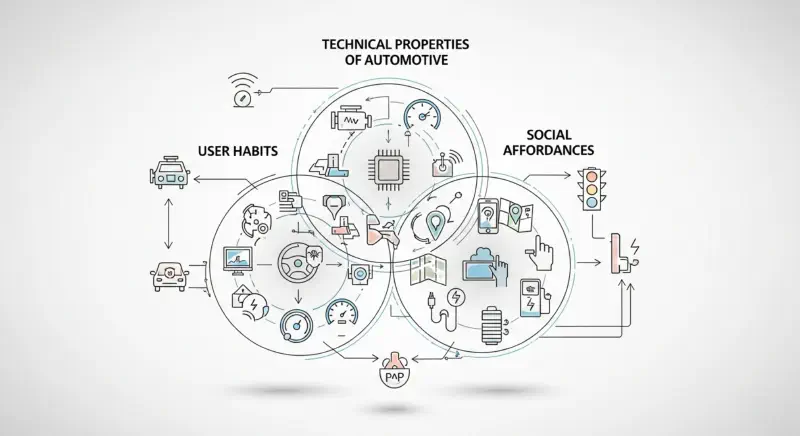
As the roads were paved and the "adventure" of driving became the "drudgery" of commuting, the "Pluto Effect" took hold. The users' habits changed, and the technology drifted to follow them. The "sophisticated motorist" no longer wanted to be a mechanic. They wanted to be a consumer. They wanted the "drift" of the machine to be handled by the machine itself. This led to the "scientification" of the chassis.
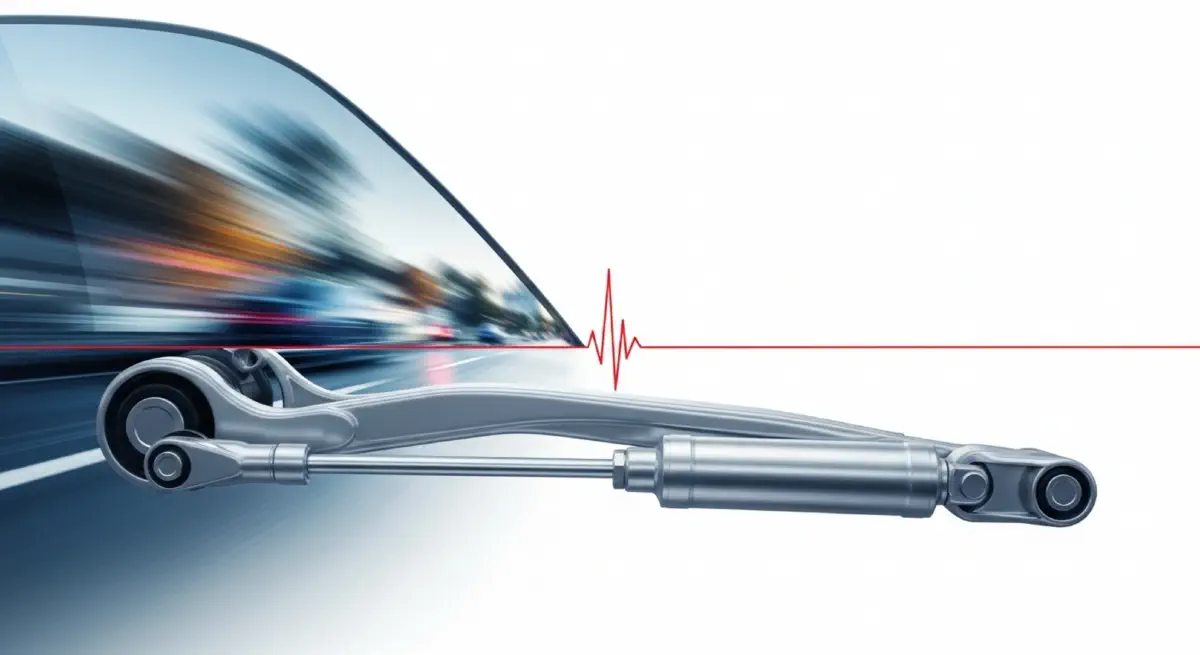
The chassis is the soul of the car's isolation. In the 1930s, the development of independent front suspension and the "scientification" of steering geometry allowed manufacturers to separate the movement of the wheels from the movement of the body. Before this, hitting a pothole with the left front wheel would send a shock through the entire axle to the right front wheel, and then up the steering column into the driver's wrists. By "scientifying" the suspension—using complex linkages and hydraulic damping—engineers could ensure that the car's body remained level while the wheels danced over the irregularities of the road. They were not just improving the ride; they were breaking the physical link between the driver and the environment.

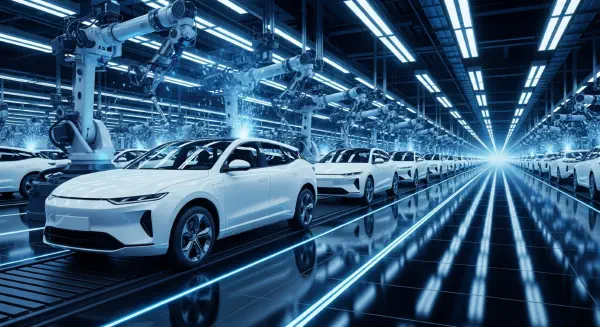
The "Electronic Revolution" of the 1970s was the final stage of this process. It was driven not by a desire for better driving, but by the need to satisfy increasingly strict emissions and safety regulations. The "Sailing Ship Effect" appeared again: as the internal combustion engine was threatened by environmental laws, it became infinitely more complex. Carburetors were replaced by electronic fuel injection. Mechanical distributors were replaced by engine control units (ECUs). The driver was "deskilled". You no longer had to know how to start a cold engine or how to avoid a skid. The machine would do it for you.
Automation is the logical conclusion of the "Cocoon." We have moved from a machine that requires a driver to a "capsule" that merely requires a passenger. The current obsession with "Self-Driving" technology is the ultimate expression of the Pluto Effect. We have spent a century paving the world and building cars that isolate us from that world. Now, we want to be isolated from the act of driving itself. The car has become a "private room on wheels," a space where we can ignore the fact that we are moving at 100 km/h (~62 mph) through a landscape that has been entirely reconstructed to serve the machine.
The "Flower Model" explains this perfectly. The "core" of the car—the four wheels and the propulsion—has barely changed in a century. But the "petals"—the infotainment systems, the climate control, the automated driving assists—have expanded to consume the entire experience. We are no longer buying a vehicle; we are buying a mobile interface. The "scientification" of the car has reached a point where the engineering is so "indirect" that the user has no idea how the machine actually works.
This is the triumph of the institution over the individual. The automotive industry, through its handbooks and its "normal change" paradigms, has created a world where the car is seen as a basic human right rather than a specific, and arguably failed, technical choice. They have rewritten the history of the car to suggest that its evolution was a series of rational, engineering-led improvements. It was not. It was a series of social drifts, technical hacks, and desperate refinements designed to keep a 19th-century explosion cycle relevant in a 21st-century world.
When you sit in your car today, you are sitting in a "capsule" of accumulated lies. You are isolated by a suspension system that was "scientified" to hide the road, an engine that was "electrified" to hide its emissions, and an automated system that was "revolutionized" to hide your own incompetence. The car is not a tool of freedom. It is a tool of paved isolation. It is the only machine we have ever built that requires us to destroy the very environment we are trying to "explore."
The "Pluto Effect" tells us that the technology will continue to drift as long as our habits remain unchanged. We are now drifting towards the "Electric Cocoon," a machine that is even heavier, even more automated, and even more isolated than the one it replaces. We are still the dog, running as fast as we can, while our legs move independently of our body, heading toward a conclusion that we are not yet ready to see.
The car did not evolve to serve us. We evolved our society to serve the car. The "scientification" of the machine was the process of making that servitude comfortable enough that we would never think to rebel against it.