In 2016, a Seattle-based mechanical engineer named John walked into a dealership with a problem. His 2007 Toyota Tundra, purchased new nine years earlier, had accumulated 260,000 miles and consumed four timing belts, three alternators, and enough brake pads to pave a small driveway. But the engine itself—a 5.7-liter V8—had never been opened. It started instantly, idled smoothly, and, according to compression tests, still produced 94 percent of its factory-rated horsepower. John wanted a new truck. The dealership offered him $4,500 for the Tundra, which they promptly auctioned to a buyer in Central America for $12,000.
The truck’s next owner will likely drive it another 200,000 miles with routine maintenance. By the time it finally stops running—likely in the late 2030s—it will have spent more than half its life outside the country where it was manufactured and sold. No regulation required its longevity. No subsidy encouraged it. The engineering choices made by Toyota in the mid-2000s—the selection of iron block construction over aluminum, the decision to oversize bearings for marginal load conditions, the use of timing chains rather than belts on the later 5.7-liter engines—created a vehicle with a functional lifespan that far exceeded both industry averages and the expectations of its original owner.
That Tundra is a fossil. It is also, quietly, a subversive object. In an industry oriented around 36-month leases, 60-month loans, and engineering cycles that treat obsolescence as a design parameter, a vehicle that outlasts its original context by 15 years challenges nearly every assumption about how cars are built, sold, and ultimately discarded. The engineering decisions that created that durability were not accidental. They were also not free. Understanding what they cost—and who paid—requires dismantling the paradox at the heart of modern vehicle design.
The Optimization Problem That Defines the Industry#
Every vehicle is a set of compromises captured in steel and aluminum. The constraints are physical, economic, and regulatory. A lighter vehicle consumes less fuel, which helps manufacturers comply with Corporate Average Fuel Economy (CAFE) standards and reduces operating costs for owners. A lighter vehicle also typically uses thinner-gauge steel, smaller bearings, and lower-capacity cooling systems—all of which reduce material costs for the manufacturer. The result, in aggregate, is a vehicle designed to meet warranty obligations (typically 60,000 miles or five years) while minimizing production expense and maximizing fuel economy scores.
The engineering term for this is “design for the target.” Components are sized not for infinite life but for a specified service life with a defined safety factor. For non-critical components—alternators, water pumps, suspension bushings—that target is frequently aligned with the warranty period. For structural components, it aligns with regulatory safety requirements and, increasingly, with second-owner durability expectations that influence resale value and, by extension, lease residuals.
This is not conspiracy. It is optimization. A manufacturer that over-engineers a component beyond its required service life adds cost that must be recovered in the vehicle price, reducing competitiveness in a market where the median new-vehicle buyer holds the car for just 79 months, according to 2023 S&P Global Mobility data. A manufacturer that under-engineers a component incurs warranty claims, brand damage, and potential recall costs. The optimal point, in theory, balances these factors.
But the optimization function includes only the costs borne by the manufacturer and, through warranty exposure, the first owner. It does not include costs shifted to second, third, and fourth owners—who may face repair bills that exceed vehicle value—nor does it include the environmental cost of premature scrappage, which typically appears in no balance sheet at all. This is not a bug. It is the mechanical expression of the externality problem described throughout the What Is Something Worth? series: the gap between what something costs and what it is worth is engineered into the product before it ever reaches a consumer.
The Thermodynamic Ceiling#
No amount of clever engineering can repeal the Second Law of Thermodynamics. Entropy increases. Moving parts wear. Heat cycles degrade seals. Corrosion attacks metals. The question is not whether a vehicle will fail but when and how the failure modes are distributed.
Consider the engine—the system that gave this series its title. A modern internal combustion engine contains roughly 200 moving parts operating under conditions that would destroy most industrial machinery. Combustion temperatures exceed 2,500 degrees Fahrenheit. Piston velocities approach 4,000 feet per minute. Oil temperatures, under sustained load, can exceed 300 degrees. The engineering problem is to contain these forces for a defined period.
The durability literature identifies three primary failure mechanisms. Abrasive wear occurs when contaminants—carbon deposits, dirt ingress, wear particles—score bearing surfaces and cylinder walls. Fatigue failure occurs when repeated stress cycles cause microscopic cracks to propagate in crankshafts, connecting rods, and valve springs. Corrosion attacks cooling systems, bearing surfaces during storage, and electrical connections.
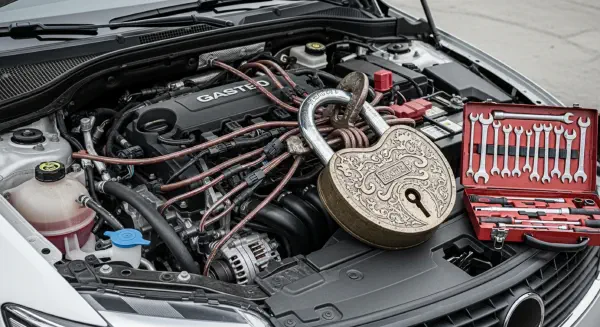
Each can be managed with design choices that carry different cost structures. Larger bearings distribute load over greater surface area, reducing fatigue risk but increasing frictional losses and requiring larger engine blocks. Closed-deck cylinder blocks—where the water jacket is fully enclosed—provide superior rigidity and gasket sealing but increase casting complexity and weight. Timing chains, properly designed, can outlast the engine; timing belts require replacement at intervals that range from 60,000 to 100,000 miles.
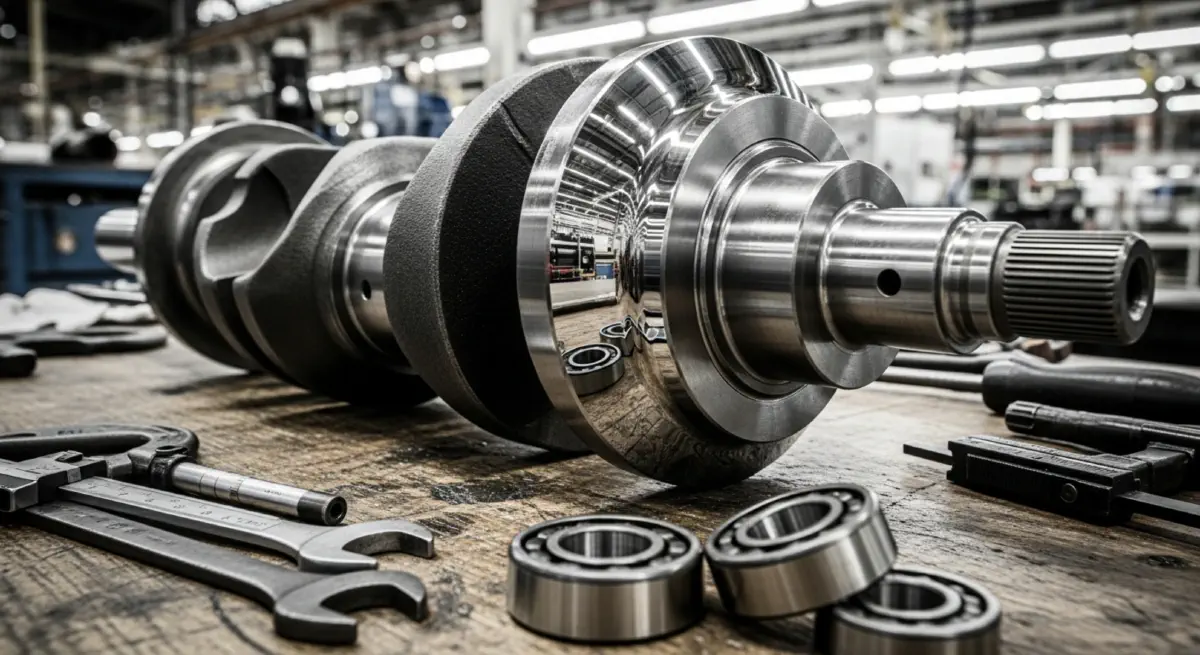
The 2007 Tundra’s 5.7-liter engine was, by the standards of its era, over-engineered relative to its required service life. Its iron block (versus the aluminum blocks used by Ford and Ram in competing trucks) added 70 to 100 pounds to vehicle weight but provided superior thermal stability and bore durability. Its six-bolt main bearing caps (versus four-bolt designs) distributed crankshaft loads across a larger area. Its timing chain was dimensioned for heavy-duty commercial service. These choices increased manufacturing cost, reduced fuel economy, and contributed to the vehicle’s 5,700-pound curb weight—all for durability that most original owners would never need.
Toyota made those choices because the Tundra competed in the full-size truck segment, where fleet buyers—construction companies, utilities, government agencies—routinely keep vehicles for 200,000 miles or more. The same engine design, scaled to a passenger sedan, would have been commercially non-viable. The durability paradox, at its core, is that longevity is only valued when the economic structure of ownership supports it.
The Regulatory Distortion#
CAFE standards, first enacted in 1975 and substantially revised in 2012, create a perverse incentive structure that systematically penalizes durability. The standards are expressed in miles per gallon, calculated across a manufacturer’s fleet. A heavier vehicle may be subject to a less stringent target—the standards are footprint-based—but every additional pound requires fuel economy improvements elsewhere in the fleet or the purchase of regulatory credits from manufacturers with surplus.
In 2023, Tesla generated approximately $1.79 billion in regulatory credit sales to other manufacturers, according to company SEC filings. Those credits allowed manufacturers to sell vehicles that would otherwise have exceeded CAFE limits. The system effectively subsidizes electrification while taxing internal combustion efficiency—and, through the weight-efficiency trade-off, taxing durability.
A manufacturer facing a choice between a 100-pound heavier, more durable engine block and a lighter, less durable alternative will, under CAFE pressure, choose the lighter option unless the market demands durability sufficiently to absorb the cost of purchasing credits. In passenger car segments, where first owners rarely keep vehicles beyond 60,000 miles, that demand is minimal. The result is a bifurcated market: heavy-duty trucks and commercial vehicles retain durability engineering; passenger vehicles increasingly do not.
The 2018 Ford F-150’s transition from steel to aluminum body panels illustrates the trade-off. The shift reduced curb weight by approximately 700 pounds, improving fuel economy by roughly 1.5 miles per gallon across the fleet. But aluminum is less fatigue-resistant than steel, more susceptible to galvanic corrosion when in contact with dissimilar metals, and significantly more expensive to repair. A steel-bodied F-150 from 2010 may rust; an aluminum-bodied F-150 from 2018 that sustains structural damage may be economically totaled because repair costs exceed vehicle value. The optimization produced a net regulatory benefit (higher CAFE compliance) at the cost of lifecycle durability.
The Economic Contradiction#
The economic structure of vehicle ownership in the United States is oriented around first-owner value retention, not lifecycle durability. The average new vehicle loan term reached 70 months in 2024, according to Edmunds data, with 20 percent of loans exceeding 84 months. Negative equity—owing more than the vehicle is worth—affects more than 30 percent of trade-ins. In this environment, first owners are economically motivated to minimize monthly payments, which encourages manufacturers to reduce production costs, which encourages design-for-target engineering that prioritizes warranty-period reliability over long-term durability.
The secondary market, in theory, should correct for this by discounting vehicles with poor long-term durability prospects. In practice, the signal is noisy. Depreciation curves are driven primarily by age and mileage, not by engineering quality, because the information required to assess durability—failure rate data beyond 100,000 miles—is not systematically available to consumers. A 2018 Honda Accord and a 2018 Ford Fusion may have similar depreciation trajectories despite substantially different long-term reliability outcomes, which are only observable years after the vehicle has left the first owner.
This information asymmetry creates what economists call a market for lemons: when buyers cannot distinguish quality, sellers have no incentive to supply quality. The manufacturer who overbuilds for durability incurs higher production costs but captures only a fraction of the value in resale price, because the second owner cannot reliably distinguish durable engineering from marketing claims. The rational manufacturer, absent countervailing forces, optimizes for the information available—which is warranty data, first-owner satisfaction surveys, and regulatory compliance metrics—none of which capture the value of a vehicle that outlasts its original context by 15 years.
The Path Dependence of Durability#
Once an industry optimizes for a particular engineering target, the capabilities required to build for durability atrophy. Suppliers consolidate around the design-for-target standard. Tooling is amortized over production volumes that assume a defined service life. Engineering talent accumulates expertise in lightweighting, aerodynamic efficiency, and electrification—not in bearing sizing, metallurgy, or fatigue analysis for high-mileage operation.
This is path dependence: the set of possible future designs is constrained by the investments already made in past designs. A manufacturer that decided today to build an internal combustion engine designed for 300,000 miles of service would face not only higher material costs but also a supply chain configured around lighter, less durable components, a workforce trained on different design principles, and a regulatory structure that penalizes the added weight.
The transition to electric vehicles adds another layer. An electric powertrain has approximately 20 moving parts, compared to 200 in an internal combustion engine. The fundamental durability challenge shifts from mechanical wear to battery degradation. A lithium-ion battery pack that retains 80 percent of its original capacity after 150,000 miles is considered excellent; a pack that retains 70 percent after 100,000 miles is typical. The electric vehicle solves the mechanical durability problem by eliminating most moving parts. It introduces a new durability problem in the battery chemistry—one that current engineering cannot yet solve without cost structures that render vehicles unaffordable in mass-market segments.
The durability paradox, in its current form, is therefore not a problem awaiting solution. It is a structural feature of an industry optimized around 36-month leases, 70-month loans, and regulatory incentives that penalize mass. The engine that can’t be replaced is not a failure of engineering. It is the predictable outcome of a system that has systematically optimized for everything except what it costs to keep a vehicle on the road for its second decade.
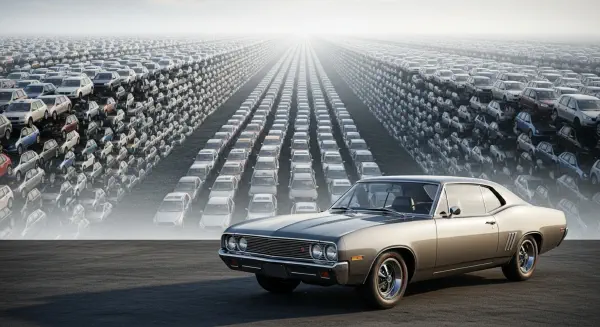
The Tundra that left Seattle in 2016 will likely enter Mexico or Guatemala, pass through several owners, and eventually be stripped for parts or melted into rebar. Its engineering choices—the iron block, the oversized bearings, the robust cooling system—will have created value for multiple owners across multiple countries, none of whom paid Toyota for the additional durability they received. The manufacturer captured none of that value. The regulatory structure penalized the choices that created it. The market did not reward it.
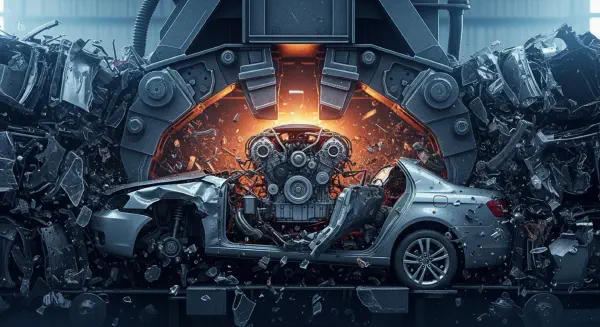
That is not a failure of the Tundra. It is a failure of the system that surrounds it—a system that has, for forty years, treated durability as a cost rather than a value, optimized for the warranty period rather than the lifecycle, and externalized the consequences to owners who can least afford the replacement and to countries that inherit the waste.
Next in the series: The Engine That Can’t Be Replaced – Part 2: The Maintenance Trap