In 1970, the U.S. Congress passed the Clean Air Act, mandating a 90% reduction in automotive tailpipe emissions. Over the next five decades, engineers performed near-miracles: catalytic converters, fuel injection, and turbocharging cut pollutants like carbon monoxide and hydrocarbons by over 99%. This triumph created a powerful illusion—that the environmental problem of the gasoline car had been solved. We had cleaned the exhaust, but we had done nothing to address the energetic and material reality upstream and downstream of the tailpipe. The modern internal combustion engine vehicle (ICEV) is a marvel of controlled combustion, but its ledger extends far beyond the cylinder, into oil fields, refineries, and a global logistics network that burns fuel to deliver fuel.
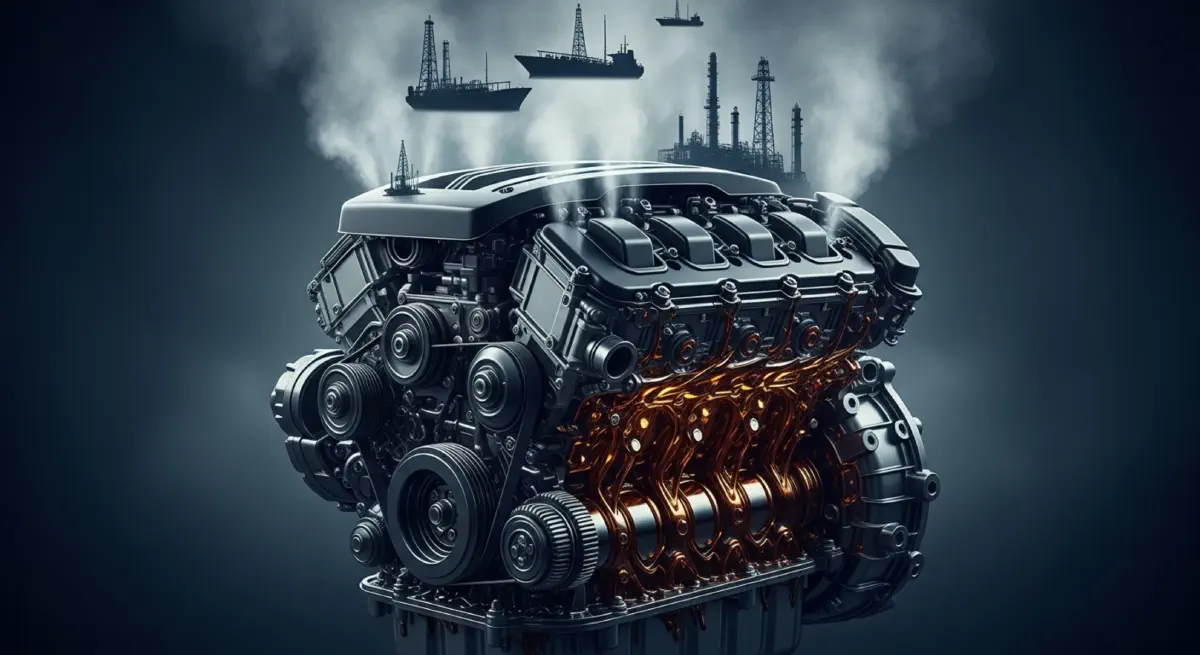
To audit the gasoline car properly requires a fundamental shift in perspective. We must stop seeing it as a device that converts gasoline into motion and start seeing it as a temporary repository for fossilized sunlight, one that leaks energy at every step from well to wheel. The standard measure—miles per gallon—captures only the final, in-use efficiency of this complex chain. A full lifecycle assessment reveals that for every gallon of gasoline burned in an engine, approximately 1.23 gallons of crude oil equivalent were extracted, transported, and refined. The “upstream” energy loss is 19-25% before the fuel even reaches the tank. This is gasoline’s first, and often ignored, shadow.
This upstream burden is compounded by the vehicle’s own material footprint. The modern ICEV, with its aluminum block, complex emissions after-treatment, and extensive electronic systems, carries a significant manufacturing carbon debt. When we account for these hidden flows, the familiar gasoline car transforms from a simple mobility tool into one of the most energy-intensive and materially complex consumer goods ever mass-produced. Its environmental ledger is not written at the tailpipe; it is written across continents and decades.
The Well-to-Tank Penalty#
The Refinery’s Hidden Furnace#
Petroleum refining is one of the most energy-intensive industrial processes on Earth. Turning a barrel of sour, heavy crude into the precise cocktail of hydrocarbons required for modern gasoline requires immense heat, pressure, and catalytic processing. Refineries themselves are powered primarily by the “bottom of the barrel”—heavier fractions like petroleum coke and residual fuel oil that cannot be turned into transport fuel.
This internal consumption represents a massive energy tax. On average, refining one gallon of gasoline consumes energy equivalent to 0.15-0.20 gallons of the finished product. This “refining loss” is rarely discussed in automotive efficiency conversations but is fundamental to the energy accounting. A car rated at 30 MPG is, from a well-to-wheel perspective, effectively a 24-25 MPG vehicle when the refinery’s furnace is included in the math.
The Logistics of Liquid Energy#
The journey from refinery to fuel tank is a global ballet of tankers, pipelines, and tanker trucks, each consuming diesel fuel. Transporting crude oil from the Middle East to a U.S. refinery burns approximately 1-2% of the cargo. Distributing finished gasoline adds another 1-2% in energy costs. While smaller than refining losses, this distribution energy is non-trivial, adding to the upstream shadow. It also represents a systemic emissions displacement: the diesel burned by tanker trucks is accounted for in the transportation sector’s emissions, not the automotive sector’s, creating a statistical sleight of hand that makes gasoline cars appear cleaner.
The Vehicle’s Embodied Carbon Backpack#
The Manufacturing Debt#
Before its first start, a typical mid-size sedan carries a carbon backpack of 5 to 7 tons of CO2. This is its embodied carbon, the emissions from mining iron ore, smelting aluminum, producing glass and plastics, and operating the assembly plant. The powertrain itself is a significant contributor. Manufacturing an internal combustion engine, with its precision-machined block, crankshaft, and valvetrain, is more energy-intensive than producing an electric motor. The complex transmission adds further material and energy cost.
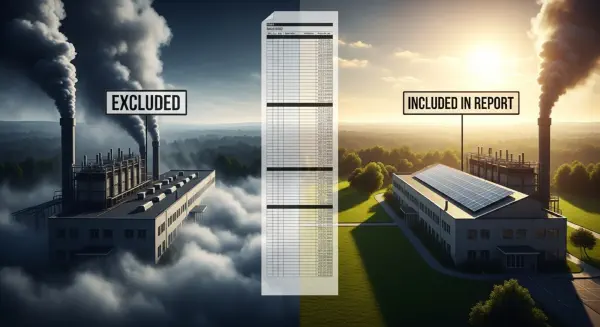
This upfront debt must be amortized over the vehicle’s lifetime. For a gasoline car emitting 150 g CO2/km, it takes approximately 30,000-40,000 miles of driving just to “pay off” the emissions from its own creation. During this period, the vehicle is effectively emitting at a rate far higher than its tailpipe suggests. This phase is often excluded from policy assessments, which focus solely on operational emissions, creating a perverse incentive to replace vehicles frequently in the name of efficiency—a move that can actually increase lifetime emissions if the manufacturing burden is not considered.
The Maintenance and Degradation Factor#
The gasoline car’s ledger includes a column for performance degradation. Over 150,000 miles, engine wear, carbon buildup, and aging sensors can reduce fuel efficiency by 10-15%. This is a creeping increase in the operational emissions rate that most lifecycle assessments assume as constant. Furthermore, the production and distribution of engine oil, filters, and replacement parts (like oxygen sensors, catalytic converters) add incremental, often unaccounted, lifecycle burdens. The replacement of a failed catalytic converter, for instance, involves mining platinum-group metals—an energy and emissions-intensive process rarely attributed to the vehicle’s lifecycle.
The Unrecycled Endgame#
The Disposal Displacement#
At end-of-life, approximately 75-80% of a vehicle by weight is recycled, primarily the ferrous scrap metal. However, the remaining shredder residue—a mix of plastics, fabrics, glass, and fluids—typically goes to landfill. This represents a final, deferred environmental cost. The fluids (engine oil, transmission fluid, coolant) can leach, and the plastics do not decompose.
More critically, the complex after-treatment systems—catalytic converters with precious metals, diesel particulate filters—present a recycling challenge. While valuable, their recovery rates are not 100%, leading to permanent material loss and the need for continuous virgin mining. This open-loop material cycle is the final entry in the gasoline ledger: a system that extracts concentrated hydrocarbons and rare metals from the earth and returns them as diffuse pollution and mixed waste.
The Integrated Balance Sheet#
When all columns are totaled—extraction, refining, distribution, manufacturing, 150,000 miles of degraded operation, and disposal—the modern gasoline car’s lifecycle carbon footprint typically falls between 45 and 55 tons of CO2 equivalent. The tailpipe accounts for 65-75% of this total. The rest is the long shadow cast by the industrial systems required to create and sustain it.
This comprehensive accounting does not render the gasoline car a villain; it renders it quantifiable. It establishes a rigorous baseline against which all alternatives must be measured. It reveals that efficiency gains in the vehicle itself, while valuable, are increasingly marginal against the fixed, systemic costs of the fossil fuel supply chain. The gasoline car’s greatest legacy may be this: it created the analytical template—the demand for a full, honest ledger—that will ultimately judge its successors. The shadow it casts is not just one of emissions, but of methodological clarity.