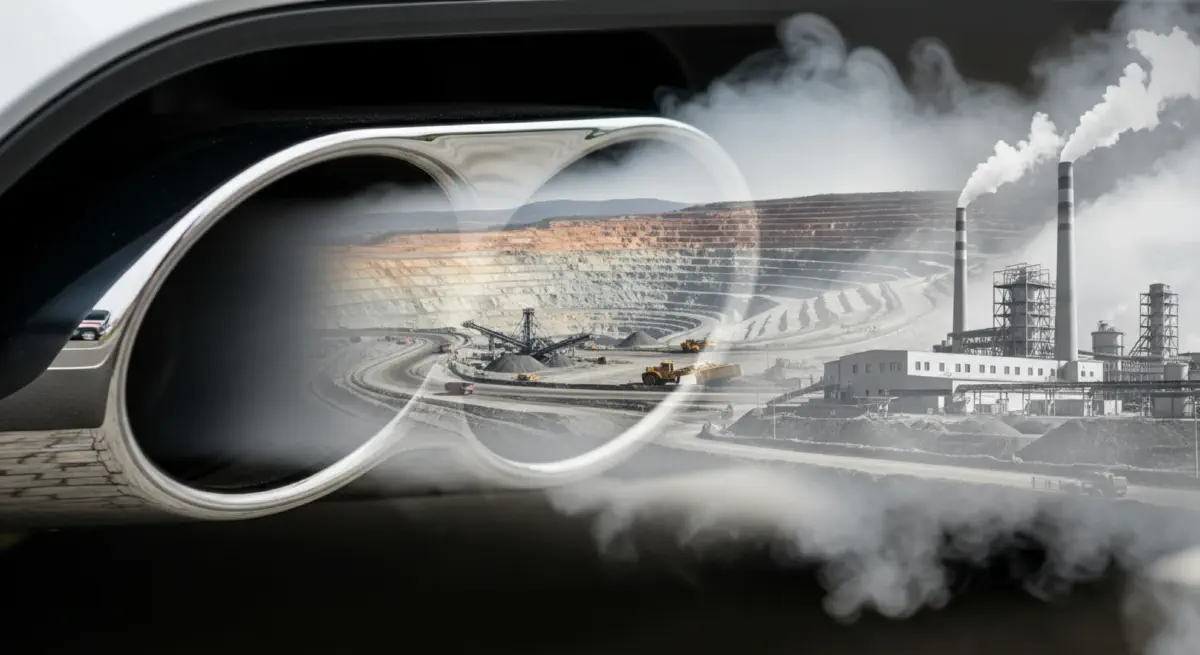
On a crisp autumn day in 2015, engineers from the International Council on Clean Transportation connected a portable emissions monitoring system to a Volkswagen Jetta TDI on a California highway. The data that streamed in would ignite a global scandal, but its deeper revelation was methodological: for decades, regulators had been reading the wrong ledger. They were auditing a car’s environmental impact by measuring only what exited the tailpipe under artificial lab conditions, a myopia that allowed a systemic fiction to flourish. The “defeat device” was a technological hack for an analytical failure.
This failure persists, even as the industry pivots to electric vehicles. The modern narrative of automotive sustainability remains anchored to a single, simplistic metric: grams of CO2 per kilometer. For internal combustion engines, this focuses obsessively on the tailpipe. For EVs, it conveniently shifts to a “zero” that ignores the power plant smokestack. Both are dangerous illusions. They represent a form of accounting malpractice that externalizes the majority of a vehicle’s true environmental costs—displacing them to distant mines, coal-fired smelters, and future waste streams. To judge an automobile’s ecological impact, we must abandon the snapshot and adopt the feature-length documentary of lifecycle assessment.
This analytical framework, governed by the critical choice of “system boundaries,” demands we trace every joule of energy and every kilogram of material from geological extraction to final disposal. It reveals that the “in-use” phase, the sole focus of regulation, often represents only 60-75% of a gasoline car’s total climate impact and 0% of an EV’s—making the unaccounted portion not a footnote, but the main story. The tailpipe, it turns out, is merely the final page of a very long, very costly ledger.
Choosing the Boundaries of Truth#
The first principle of environmental accounting is that the answer you get is determined by the question you ask, and more specifically, by where you draw the line around the system. The automotive industry has, for a century, operated within the most politically convenient boundary: Tank-to-Wheel (TTW). This measures only what happens from the moment fuel is in the tank to the moment the wheels turn. It is clean, tractable, and disastrously incomplete.
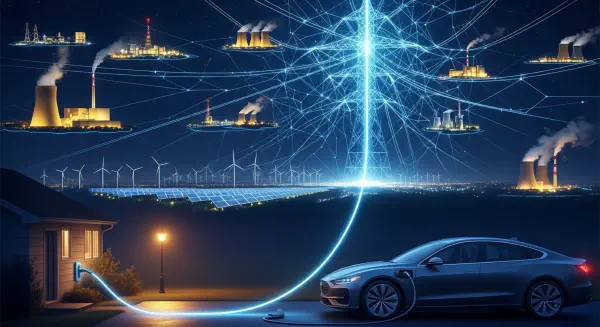
The first major correction is the Well-to-Wheel (WTW) boundary. This expands the ledger to include the “upstream” energy costs and emissions of producing and delivering the fuel or electricity. For gasoline, this adds the emissions from crude oil extraction, transportation, refining, and distribution—adding roughly 20-30% to the TTW figure. For an EV, WTW is everything; it attributes the emissions of the power generation mix directly to the vehicle. An EV in a grid powered by coal can have a WTW footprint approaching that of an efficient hybrid. The car’s cleanliness is no longer intrinsic but contingent on geography.
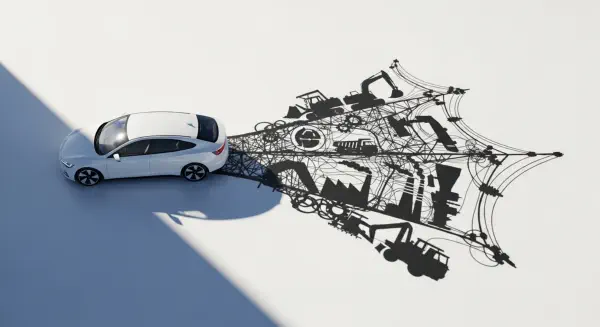
The most comprehensive—and most revealing—framework is the full Cradle-to-Grave Life Cycle Assessment (LCA). This adds the “embodied” impacts of manufacturing the vehicle itself and the “end-of-life” impacts of recycling or disposal. It asks not how clean a car drives, but how clean a car is. Suddenly, the energy-intensive production of aluminum body panels, the carbon-loaded smelting of battery-grade lithium, and the future challenge of managing thousands of pounds of composite waste enter the equation. This boundary reveals the often staggering “carbon backpack” a new car carries off the assembly line, a debt it must drive to repay.
The Manufacturing Carbon Backpack#
A mid-size sedan arrives at the dealership having already consumed the energy equivalent of driving 15,000 miles. This upfront burden is dominated by materials. Producing one ton of automotive steel emits approximately 1.8 tons of CO2. For aluminum, the figure rockets to 8-12 tons of CO2 per ton of metal, due to the electrolysis process. A vehicle containing 900 kg of steel and 150 kg of aluminum thus embodies over 3 tons of CO2 from these two materials alone—before a single robot welds a joint.
The assembly plant itself is a cathedral of concentrated energy consumption. The paint shop, with its massive curing ovens, is typically the single largest energy user. Studies peg total assembly energy at 4-6 Gigajoules per vehicle. For a gasoline car, this initial debt is paid down against years of tailpipe emissions. For an EV, this backpack is heavier due to the battery, making the manufacturing column of its ledger the most critical to its overall environmental performance.
The Calculus of Displacement#
Narrow boundaries don’t make impacts vanish; they simply shift them in space, time, and category. This is the phenomenon of lifecycle displacement, the core externality of incomplete accounting.
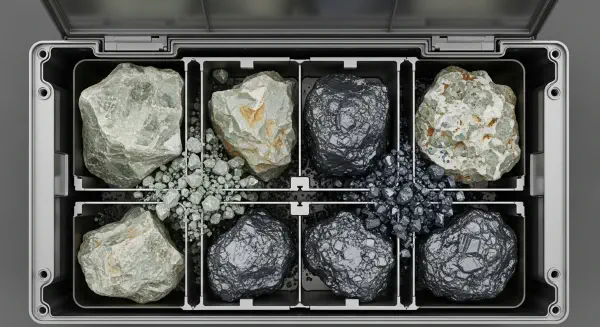
Spatial Displacement is most visible. The push for lightweight aluminum to improve fuel efficiency (a TTW benefit) has moved the associated pollution from drivers’ cities to smelting centers, often in regions with coal-heavy grids like China’s Xinjiang province. Similarly, the mining for battery minerals creates localized soil and water contamination in South American lithium brine fields or Central African cobalt mines, impacts physically and politically distant from end-users.
Temporal Displacement mortgages the future. Complex emissions after-treatment systems (like diesel particulate filters) reduce in-use pollution but create a future waste stream of contaminated, expensive-to-recycle ceramics. The current fleet of lithium-ion batteries represents a massive end-of-life liability arriving in 2035-2040, a problem deferred to future taxpayers and regulators.
Impact Category Displacement is subtler. Optimizing solely for CO2 (a global pollutant) led to the diesel boom in Europe, which disastrously increased emissions of NOx and particulates (local pollutants), degrading urban air quality and public health. The accounting framework chose one column in the ledger, and the industry optimized for it at the expense of all others.
The Fiction of a Finished Balance#
The persistence of the tailpipe metric is not an accident of science; it is an artifact of power. Regulators favor metrics that are simple to test and administer. Industries lobby for boundaries that showcase their strengths. The result is a collective fiction that a car’s environmental story is written only on the road.
Adopting a full lifecycle perspective is computationally harder and politically fraught. It implicates supply chains many would prefer to keep opaque. It reveals that a “zero-emission vehicle” can be responsible for significant emissions if its production is dirty. It forces uncomfortable questions about material sourcing and infinite growth on a finite planet.
Yet, this rigorous accounting is the only path to genuine sustainability. It transforms the automotive from a product into a process, a temporary configuration of global energy and material flows. The tailpipe told a simple, comforting story. The full ledger tells a complex, inconvenient, and necessary truth. To move beyond the tailpipe is to finally start reading the whole book.