In the Atacama Desert of Chile, vast, polychrome evaporation ponds shimmer under a relentless sun. They are harvesting lithium from ancient brine deposits, a critical first step in the electric vehicle revolution. Over 10,000 miles away, in the humid forests of the Democratic Republic of Congo, artisanal miners descend into hand-dug pits, extracting cobalt-bearing ore. These two landscapes, one arid and geometric, the other lush and chaotic, are the new foundational geography of the automotive industry. They are the literal ground zero for the battery electric vehicle’s (BEV) promise of a clean future.
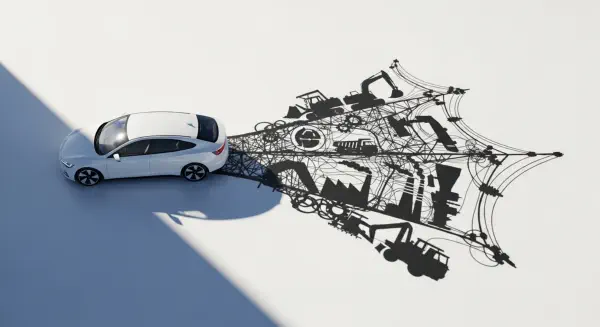
This promise hinges on a profound environmental bargain: accept a large, upfront carbon and ethical debt to secure decades of cleaner operation. The lithium-ion battery pack is the nexus of this deal. It is the most expensive, energy-intensive, and geopolitically fraught component in a modern EV. Its production is an industrial saga of globalized complexity, where the emissions and impacts are largely “buried”—displaced from the end-user and obscured by the zero-tailpipe narrative. To honestly evaluate the EV’s ledger, we must perform a forensic audit of the battery. This audit reveals not just carbon, but a web of dependencies and trade-offs that challenge simplistic notions of sustainability.
The battery’s environmental account is dominated by two phases: the mining and refining of its critical minerals (the “embodied” impact), and the energy-intensive manufacturing of the battery cells themselves (the “industrial” impact). Together, they can represent 30-50% of an EV’s total cradle-to-grave greenhouse gas emissions. This is the battery’s buried carbon, a debt that must be driven off over tens of thousands of miles before the EV’s operational advantage truly clears the ledger.
From Ore to Cathode: A Journey of Intensive Transformation#
The Mineral Toll#
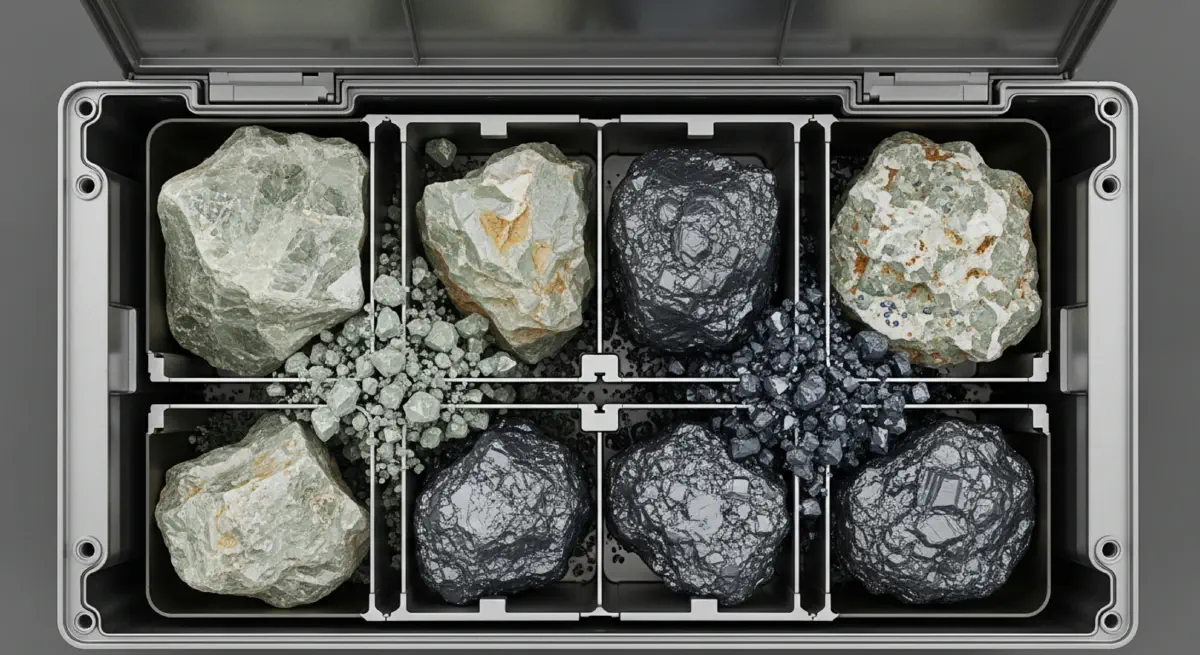
A typical 75 kWh NMC (Nickel-Manganese-Cobalt) battery pack contains roughly 8-12 kg of lithium, 35-50 kg of nickel, 10-15 kg of manganese, and 5-10 kg of cobalt. These are not simply dug from the ground and installed. Each undergoes a series of transformative, energy-hungry processes.
Lithium from brine, as in the Atacama, is pumped into massive ponds and evaporated over 12-18 months, a process that consumes vast quantities of water in one of the driest places on Earth. Estimates suggest producing one ton of lithium carbonate can require up to 2 million liters of water, directly impacting local agriculture and indigenous communities. The subsequent chemical conversion to battery-grade lithium hydroxide is thermally intensive, often powered by fossil fuels.
Nickel and cobalt present a different challenge. High-grade nickel sulfide ores are depleting, pushing miners towards laterite ores, which require energy-intensive high-pressure acid leaching (HPAL). This process can emit over 20 tons of CO2 per ton of nickel produced if powered by coal, as is common in Indonesia, the world’s largest nickel producer. Cobalt refining is concentrated in China, where the grid’s coal dependency imprints a significant carbon footprint on the final metal. The geopolitical dimension is acute: the DRC supplies over 70% of the world’s cobalt, a supply chain riddled with ethical concerns over artisanal mining practices.
The Gigafactory Gauntlet#
Once refined, these materials embark on the most carbon-intensive leg of their journey: cell manufacturing. This process, dominated by a few Asian giants like CATL, LG Energy Solution, and Panasonic, is a marvel of precision and scale—and a voracious consumer of electricity.
The heart of the matter is the electrode drying and the cell “formation” process. Coating the anode and cathode slurries onto metal foils requires large, controlled-heat dryers. The formation step, where cells are charged and discharged for the first time to stabilize the solid-electrolyte interphase (SEI) layer, can take days in climate-controlled chambers. This phase alone can account for 25-40% of the total energy consumed in cell manufacturing.
The carbon content of this manufacturing energy is everything. A battery cell made in a region heavily reliant on coal (e.g., parts of China, Poland) can have a carbon footprint 2-3 times larger than an identical cell made using hydropower (e.g., in Norway or the Canadian province of Quebec). Studies show a spread of 60 to 150 kg of CO2 per kWh of battery capacity based on the grid mix. For a 75 kWh pack, that’s a variance of 4.5 to 11 tons of CO2—equivalent to the total manufacturing emissions of an entire compact gasoline car.
The Cruel Calculus of Chemistry and Scale#
The Designer’s Dilemma#
Battery chemists are engaged in a constant triage, balancing energy density, cost, longevity, safety, and environmental impact. Each choice reshuffles the ledger. The industry’s shift from NMC 111 to higher-nickel formulations like NMC 811 (8 parts nickel, 1 each manganese and cobalt) was driven by energy density and cost (reducing expensive cobalt). However, nickel’s refining is notoriously carbon-intensive. Furthermore, high-nickel cathodes can be more thermally unstable, potentially requiring more sophisticated and resource-heavy cooling systems.
The push towards lithium iron phosphate (LFP) batteries, championed by Tesla and Chinese manufacturers, represents a different trade-off. LFP chemistry uses no nickel or cobalt, sidestepping their ethical and carbon pitfalls. It is also cheaper and more stable. The trade-off is lower volumetric energy density, meaning a heavier, bulkier pack for the same range, which can increase a vehicle’s operational energy use. This is a classic displacement: reducing manufacturing impacts at the potential cost of in-use efficiency.
The Scale Paradox#
The EV transition is predicated on exponential growth, which brings both efficiency gains and colossal scale-up risks. Economies of scale and technological learning are steadily reducing the energy and cost per kWh. However, the sheer volume of material required introduces systemic fragilities.
Projected demand for lithium, cobalt, and nickel is set to outstrip current mine production within this decade. This creates intense pressure to open new mines, often in ecologically sensitive areas or regions with weak governance. It also creates staggering concentration risk. China controls over 60% of the world’s lithium refining capacity, 75% of cobalt refining, and a commanding share of cathode and anode production. This dependency creates a profound vulnerability for automotive supply chains, echoing the geopolitical fragility long associated with oil.
The end-of-life column in the battery ledger remains largely blank, a future liability. While recycling technologies exist, the economics are challenging, and the infrastructure is nascent. The risk is creating a “battery mountain” in 15 years, or perpetuating a cycle where spent EV batteries are shipped to developing nations for informal, hazardous recycling, displacing the pollution once again.
A Debt That Demands Scrutiny#
The battery’s buried carbon is not an argument against electrification. It is the essential cost of entry, the sobering down payment on a cleaner transport future. The critical insight from lifecycle accounting is that this debt is not fixed. It is a variable profoundly sensitive to three factors: chemistry, manufacturing energy, and supply chain ethics.
A BEV powered by a battery made with coal in a supply chain blind to externalities may offer a modest climate benefit over its life. The same BEV, powered by a battery manufactured with renewable energy from a transparent, responsibly sourced supply chain, represents a dramatic leap forward. The difference between these two scenarios is not automotive engineering; it is industrial and energy policy.
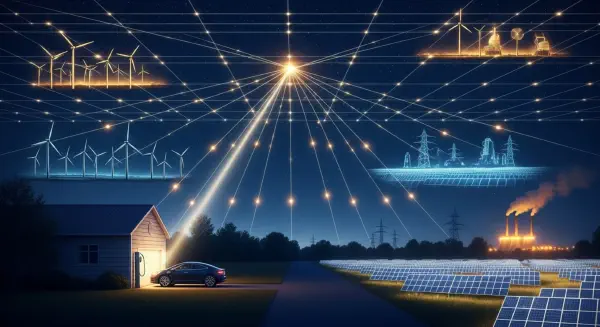
Therefore, the true measure of the EV’s environmental promise lies not in the showroom, but in the gigafactory’s power source and the mine’s environmental management plan. To clear the battery’s carbon debt efficiently, we must green not just the grid that charges the car, but the industrial grid that forges its heart. The automotive ledger is forcing a long-overdue truth: sustainability is not a property of a product, but of the entire system that creates it.