In 2015, the global automotive industry held its breath as regulators unveiled the results of a new, more realistic emissions test. The scandal that followed—Volkswagen’s deliberate deception on diesel emissions—was not an anomaly. It was a symptom. The “defeat device” was a crude technological hack for a systemic problem: our collective fixation on a single, easily-gamed metric, the tailpipe.
For decades, the tailpipe has been the sole narrator of a car’s environmental story. Governments taxed based on its output. Consumers compared MPG figures derived from its efficiency. This narrow aperture created a powerful, perverse incentive: optimize for what is measured, and displace everything else beyond the lens. The result is an accounting fiction. It ignores the energy debt incurred long before the first mile—in mining pits, smelting furnaces, and sprawling assembly plants. It is blind to the geopolitical webs spun to secure lithium, cobalt, and nickel. It treats the future disposal of thousands of pounds of complex materials as someone else’s problem.
This fictional ledger has shaped a trillion-dollar industry. It has fueled a technological arms race focused overwhelmingly on one variable: grams of CO2 per kilometer at the exhaust. To understand the true cost of mobility, we must tear up this incomplete balance sheet. We must adopt the rigorous, often uncomfortable, discipline of lifecycle environmental accounting. This framework doesn’t ask how clean a car drives. It asks how clean a car is.
Reframing the Question from Mileage to Genesis#
The central claim of environmental accounting is disarmingly simple yet analytically revolutionary: to judge an automobile’s ecological impact, you must account for every joule of energy consumed and every kilogram of emission produced across its entire existence. This shifts the analytical frame from a snapshot to a feature-length film. The narrative begins not with a turn of the key, but with the geological disturbance of mining.
This cradle-to-grave perspective is governed by a critical choice: where to draw the system boundary. The old tailpipe model uses a “tank-to-wheel” or “plug-to-wheel” boundary. It’s neat, tractable, and politically convenient. The modern analytical standard is “well-to-wheel,” which includes the energy and emissions from producing and delivering the fuel or electricity. The most comprehensive—and revealing—is the full lifecycle assessment (LCA), which adds the substantial burdens of material extraction, manufacturing, maintenance, and end-of-life recycling or disposal.
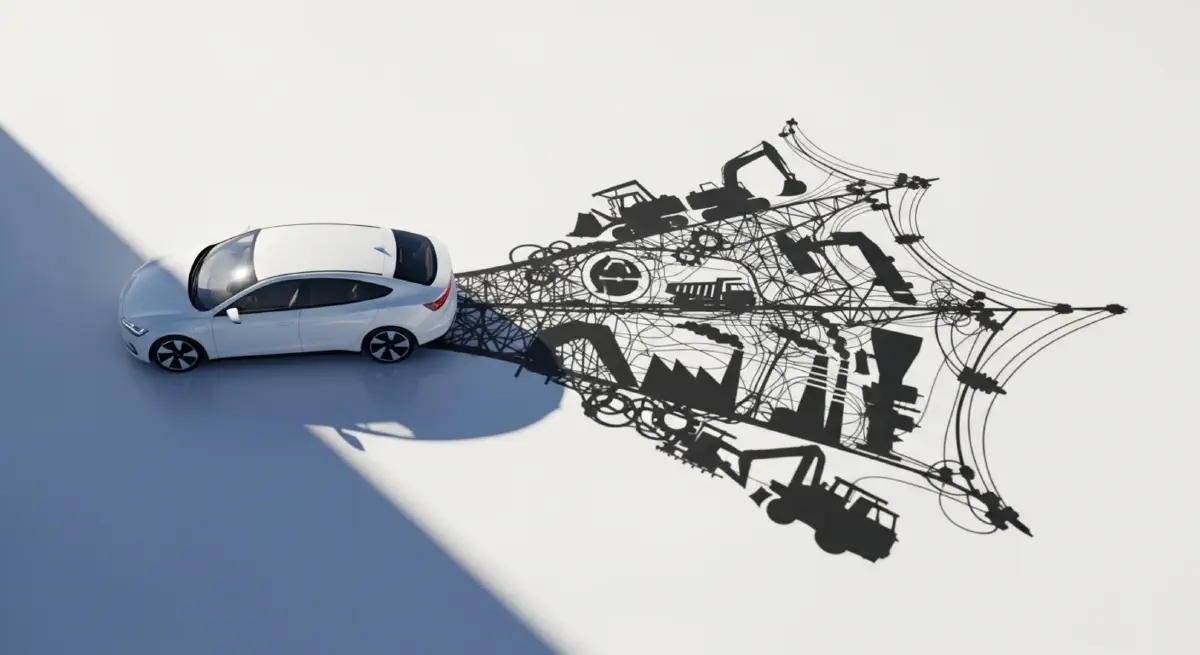
The difference is not academic; it’s transformative. Consider a conventional sedan. Its tailpipe may emit 120 g CO2/km. A well-to-wheel analysis adds roughly 20-30% to that figure for the refining and transportation of gasoline. A full LCA might add another 15-25% for manufacturing, primarily from the energy-intensive production of steel and aluminum. Suddenly, the car’ “in-use” emissions represent only about 60-70% of its total climate impact. The vehicle arrives at the dealership carrying a significant carbon backpack, a debt accrued before its first journey.
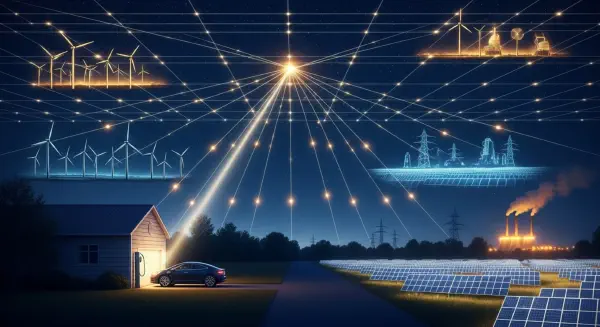
For electric vehicles (EVs), this boundary exercise is even more critical. Their tailpipe emissions are zero, presenting a deceptively clean slate. A well-to-wheel analysis immediately complicates the picture by attributing to the EV the emissions of the power plants generating its electricity. In a grid powered by coal, an EV’s well-to-wheel emissions can approach those of an efficient hybrid. In a grid rich with hydro or nuclear, they plummet. The car’s “cleanliness” is no longer an intrinsic property but a function of its geographical and temporal context.
The Hidden Chapters of the Automotive Lifecycle#
The Energy Debt of Existence#
Long before an automobile moves, it must be called into being from the earth. This phase—vehicle manufacturing—is an intense, hidden burst of energy consumption. Producing one ton of automotive-grade steel releases approximately 1.8 tons of CO2. For aluminum, the figure is staggeringly higher, between 8 and 12 tons of CO2 per ton of metal, driven by the vast electrical loads of the electrolysis process. For a typical mid-size car containing 900 kg of steel and 150 kg of aluminum, the embedded carbon from these two materials alone can exceed 3 tons of CO2.
The assembly plant itself is a cathedral of industrial energy use: paint shops running at precise temperatures, robotic arms welding and painting, and massive stamping presses forming metal. Studies peg the energy cost of assembly at 4 to 6 gigajoules per vehicle, equivalent to the energy contained in about 35 gallons of gasoline. This “carbon backpack” means every new car rolls off the line having already consumed the energy equivalent of driving thousands of miles. For a gasoline car, this debt is paid down over years of operation. For an EV, this upfront carbon load is heavier, primarily due to its battery, and must be offset against years of cleaner operation.
The Displaced Burden#
The relentless focus on tailpipe emissions has not made them disappear; it has often simply shifted them in space and time. This is the phenomenon of lifecycle displacement, a core externality of narrow accounting. The most glaring example is the geographic shift of pollution from affluent urban centers in the West to mining communities and industrial zones in the Global South.
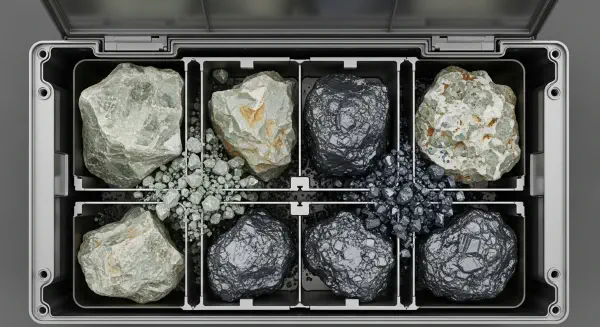
The demand for lightweight aluminum to improve fuel efficiency has boomed. However, the smelting of aluminum is profoundly electricity-intensive. This has driven production to locations with cheap, often coal-fired power, like parts of China and the Middle East. The CO2 emissions and local pollution from generating that power are accounted for in the aluminum’s carbon footprint but are physically displaced from the end-user. Similarly, the mining for battery-grade lithium in South American salt flats or cobalt in the Democratic Republic of Congo creates localized environmental degradation—water table depletion, soil contamination—that never factors into a showroom sticker or a national emissions inventory.
Temporal displacement is equally significant. The push for complex emissions after-treatment systems (like diesel particulate filters) reduces tailpipe NOx and PM but creates a future waste stream of expensive, contaminated ceramic components. The current generation of lithium-ion batteries presents a massive end-of-life reckoning looming 10-15 years from now. By optimizing for the “in-use” phase, we have created a conveyor belt of deferred environmental liabilities.
The Policy-Driven Mirage#
The ledger is never purely technical; it is fundamentally shaped by power and policy. Regulatory frameworks mandate what is counted, thereby determining what is optimized. The European Union’s past reliance on lab-based CO2 targets, for instance, directly encouraged the adoption of diesel technology—which performed well on that singular metric—while exacerbating urban air quality crises from NOx and particulates, which were undervalued.
Subsidies create powerful accounting distortions. Consumer tax credits for EVs explicitly socialize the high upfront cost of batteries, making the personal economics work while obscuring the full system cost. Meanwhile, the trillions of dollars in implicit subsidies for fossil fuels globally, from tax breaks to unpriced externalities like air pollution health costs, artificially deflate the operational cost of gasoline vehicles. This creates a policy hall of mirrors where the true, unsubsidized cost of different energy pathways becomes almost impossible for the market to discern.
This power dynamic extends to standard-setting. Who defines the “standard driving cycle” used in testing? Which emissions are regulated (CO2) versus which are merely monitored? The answers to these questions, decided in closed-door committees and influenced by industrial lobbying, create the rules of the game. They determine whether a vehicle’s ledger shows a profit or a loss, long before any real-world fuel is burned.
The Incomplete Balance Sheet#
The triumph of the tailpipe metric has delivered genuine efficiency gains but at the cost of a dangerously fragmented understanding. We have engineered vehicles that are marvels of thermodynamic efficiency on a test stand but may be responsible for a more dispersed and complex web of environmental impacts. We celebrate the zero-emission vehicle while outsourcing its most carbon-intensive component—battery production—to supply chains opaquely intertwined with coal power.
This fractured accounting breeds systemic fragility. It creates supply chains hyper-concentrated on single points of failure, like Chinese processing for rare earth elements. It makes national decarbonization strategies vulnerable, as seen in Europe’s reliance on Russian natural gas. It externalizes risks—from mining conflicts to future battery waste mountains—rendering them invisible to quarterly earnings reports and five-year policy plans.
The path forward is not to abandon metrics but to sophisticate them. It requires adopting a multi-parameter ledger that accounts for greenhouse gases, conventional pollutants, critical resource use, and ecosystem impacts simultaneously. It demands transparency in supply chains and dynamic models that can reflect a decarbonizing grid. The goal is not to find a single “right” answer, but to ask the full, uncomfortable set of questions. The tailpipe told a simple story. The truth, as we are beginning to learn, is a vastly more complicated and consequential ledger.