September 18, 2015, began as a routine test at West Virginia University’s Center for Alternative Fuels, Engines and Emissions. Researchers, working for a small clean-air NGO, had fitted a portable emissions system to a Volkswagen Jetta and driven it from Los Angeles to Seattle. Their goal was to showcase the cleanliness of modern diesel. Instead, they recorded nitrogen oxide (NOₓ) emissions up to 40 times above the U.S. legal limit. The data was so alarming they checked and rechecked their equipment. There was no error. The car’s engine control unit contained a “defeat device”—software that detected laboratory testing conditions and switched to a clean mode, while emitting illegal levels of pollutants during real-world driving. This was not a mechanical failure. It was the logical endpoint of an accounting regime that prized the wrong numbers.
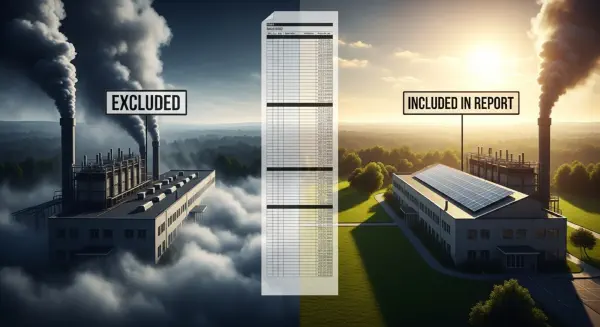
“Dieselgate” is universally described as a fraud scandal. It was. But at a systemic level, it was the catastrophic failure of a specific form of environmental accounting. For two decades, European climate policy had been built on a simple, compelling arithmetic: diesel engines are 20-30% more fuel-efficient than gasoline, therefore they emit 20-30% less CO₂ per kilometer. In a regulatory framework obsessed with the single metric of greenhouse gases, diesel was the champion. What this accounting externalized were the other products of combustion: nitrogen oxides and particulate matter, which cause respiratory illness, cardiovascular disease, and premature death. The ledger had a fatal design flaw: it counted carbon in the “cost” column but left local air pollution off the balance sheet entirely.
The scandal, therefore, was not an aberration but an emergent property of the rules. When regulators measure only what is easy to measure in a lab (CO₂, using a standardized driving cycle), and attach massive financial and reputational penalties to that result, they create an irresistible incentive to optimize for the test. The complex, expensive after-treatment systems needed to clean NOₓ—selective catalytic reduction (SCR) with urea injection—reduce efficiency and increase cost. For automakers competing on the accounted metric (CO₂) and price, the rational choice was to find the minimal NOₓ compliance that could be achieved in the lab, even if it meant cheating or system deactivation in the real world. The accounting framework made cheating not just possible, but economically rational.
The Fatal Flaw: Monometric Optimization#
The CO₂ Tunnel Vision#
The European Union’s vehicle emissions accounting system was monometric. While it had limits for NOₓ and particulates, the dominant force shaping vehicle design was the fleet-average CO₂ target, backed by steep fines. This created a perverse subsidy for diesel. Because diesel’s higher fuel economy lowered fleet-average CO₂, automakers were incentivized to sell more diesels, often at a discount. At its peak, over 50% of new cars sold in Europe were diesel, compared to about 1% in the United States, where air quality standards (especially in California) were stricter and more robustly enforced.
The accounting treated CO₂ as a global pollutant with a uniform impact, while NOₓ was treated as a local concern. This ignored the reality that CO₂ mitigation is a long-term, global collective action problem, while NOₓ pollution causes immediate, local harm to human health. By allowing the long-term, diffuse problem to dominate the regulatory calculus, the system effectively traded measurable public health today for a marginal, deferred climate benefit. Studies later estimated that excess NOₓ emissions from diesel cars in Europe were responsible for approximately 10,000 premature deaths annually.
The Laboratory Fiction#
The second accounting failure was the testing protocol itself. The New European Driving Cycle (NEDC) was a gentle, unrealistic profile run in a climate-controlled lab on a rolling road. It did not account for cold starts, aggressive acceleration, hills, or accessory use (air conditioning). This created a gap—not an accident, but a designed feature—between the accounted emissions (test results) and real-world impacts.
Automakers didn’t just cheat with defeat devices; they legally “optimized” for the test. They used special lubricants, over-inflated tires, disconnected alternators, and taped over seams to reduce drag. The test became a specific engineering puzzle to solve, divorced from the goal of reducing actual environmental impact. The accounting framework had created a simulation that mattered more than reality.
The Aftermath: A Lesson in Incomplete Accounting#
The Reckoning and Regulatory Patch#
The exposure of the fraud forced a painful re-accounting. Suddenly, the “low-carbon” diesel fleet was revealed as a major public health liability. Cities like Paris, Madrid, and London announced bans on diesel vehicles. Residual values plummeted. The EU was forced to hastily implement Real Driving Emissions (RDE) tests with portable monitors, a belated attempt to close the accounting gap between lab and road.
The scandal also exposed the collateral damage of bad accounting. The rush to diesel had skewed entire economies. It had delayed investment in hybrid and electric technologies, as diesel met near-term CO₂ targets. It had created a dependency on a technology that was now politically toxic, making the subsequent transition to electrification more abrupt and disruptive. The accounting error had locked in a technological pathway with massive stranded asset risk.
The Corrected Ledger: Integrating the Columns#
The true lesson of Dieselgate is that environmental accounting must be multi-parametric and aligned with real-world conditions. You cannot optimize for one column (CO₂) and ignore the others (NOₓ, PM, real-world energy use). A modern, robust accounting framework must:
- Internalize All Externalities: Use integrated assessment models that include health costs from air pollution alongside climate damage costs from CO₂.
- Measure Real-World Performance: Basing compliance on real-world usage with telematics and portable monitors, ending the fiction of the laboratory-as-universe.
- Adopt a Full Lifecycle Perspective: Assessing not just tailpipe emissions but manufacturing and fuel production impacts, preventing the displacement of burdens from one lifecycle phase or pollutant to another.
The Legacy of a Broken System#
Dieselgate is more than a case study in corporate malfeasance. It is a tombstone for an era of simplistic, reductionist environmental accounting. It proved that what gets measured gets managed, and what doesn’t get measured gets maximized—to society’s detriment.
The scandal serves as a permanent warning: accounting rules are not mere technicalities. They are constitutions for technological development. They define what “good” means. When the definition is flawed—when it counts some costs and ignores others, when it measures an artificial world instead of the real one—the system will produce flawed, and even deadly, outcomes. The diesel engineers weren’t just cheating regulators; they were playing the game the accounting rules had set up, a game where the only score that mattered was CO₂ in a lab.
The clean-up continues, not just of the polluted air, but of the polluted accounting that made it inevitable. The dossier on diesel is closed, but its central lesson must remain open: before we trust any ledger of environmental progress, we must first audit the auditors.