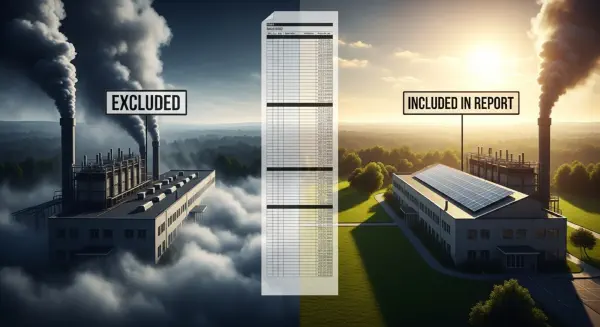
In 2017, the Trump administration’s Environmental Protection Agency published a regulatory impact analysis that reached a startling conclusion: relaxing vehicle fuel economy standards would have negligible social cost. The technical basis was a simple change to an obscure input. The administration reduced the Social Cost of Carbon (SCC)—the estimated economic damage caused by one ton of CO₂ emissions—from the Obama-era figure of around $50 per ton to as low as $1 per ton. With carbon damage now priced as trivial, the benefits of stricter standards evaporated in the model. The same barrels of oil, the same tons of emissions, the same physical reality—but a different number in a spreadsheet had transformed a climate imperative into a regulatory burden.
The SCC is the most important number you’ve never heard of. It is the linchpin of cost-benefit analysis for thousands of regulations worldwide, from power plant rules to appliance standards. It is an attempt to translate the diffuse, global, long-term, and non-market impacts of climate change—coastal inundation, agricultural loss, human mortality, ecosystem collapse—into a single, neat dollar figure that can be plugged into economic models. But this translation is not science; it is highly politicized alchemy. The number that emerges is less a discovery of inherent value and more a reflection of ethical assumptions, discount rates, and political priorities. It represents the ultimate accounting abstraction: putting a price on the priceless to decide what we can afford to destroy.
The battle over the SCC is a paradigmatic accounting war because it exposes the fiction of objective economic valuation. The models require philosophers and ethicists to make choices that are disguised as technical inputs: How much do we value the well-being of people born in 2100 versus people alive today? How do we price the extinction of a species or the loss of a glacier? The answers to these questions, expressed through discount rates and damage functions, can change the SCC by an order of magnitude, thereby justifying either radical action or complacent inaction. The poisoned sky, it turns out, has a price tag that is negotiable.
The Machinery of Monetization#
The Discount Rate: The Price of the Future#
The most powerful lever in SCC models is the discount rate. This economic concept determines how much we value future damages compared to present ones. A high discount rate (e.g., 7%) means future harms are heavily discounted, making them seem less urgent. A low rate (e.g., 2%) gives them more weight.
The choice is fundamentally ethical, not economic. Using a high rate, as the Trump administration did, implies that the welfare of future generations is significantly less important than our own consumption today. It treats climate damage as a standard financial investment. Nobel laureate William Nordhaus, using a discount rate around 4-5%, derived an SCC of $37 per ton. British economist Nicholas Stern, arguing from an ethical position of intergenerational equity and using a near-zero discount rate, arrived at a figure over $300 per ton. The same physical ton of CO₂ was valued eight times differently based on a philosophical choice about time and morality.
The Damage Function: Mapping Unknown Unknowns#
The damage function is the other critical component—a mathematical equation that attempts to predict how much economic output will be lost per degree of warming. This is an exercise in profound uncertainty. Models struggle to quantify “tail risks” (low-probability, catastrophic events like Gulf Stream collapse), non-market losses (biodiversity, cultural heritage), and tipping points (where warming triggers irreversible, cascading changes).
Conservative models tend to extrapolate linearly from past experience, underestimating systemic rupture. When the Biden administration recalculated the SCC, it interimly raised it to about $51 per ton, but newer research incorporating better climate science and risk suggests the true cost could be over $200 per ton. The difference between these figures, when multiplied by billions of tons of emissions, represents a multi-trillion-dollar gap in accounted cost. This gap is not an error margin; it is a zone of political and methodological conflict.
The Real-World Consequences of an Abstract Number#
Regulatory Arbitrage and Policy Paralysis#
The SCC is not academic; it is operational. In the U.S., it is legally required in federal rulemaking. A low SCC makes fossil fuel projects, high-emission vehicles, and energy-intensive industries appear economically rational. A high SCC justifies stringent regulation, carbon taxes, and aggressive public investment in alternatives.
For the automotive industry, the SCC directly shapes Corporate Average Fuel Economy (CAFE) standards. A $1/ton SCC might justify a 40 MPG standard, as the climate benefits of going further are minimal. A $200/ton SCC could justify a 60 MPG or electrification mandate, as the avoided climate damages now outweigh technology costs. The number in the model effectively picks technological winners and losers before any engineer draws a blueprint.
The Socialization of Cost, The Privatization of Benefit#
The deeper implication of the SCC is that it formalizes the externalization of harm. By assigning a finite price to carbon pollution, the model implicitly accepts that a certain amount of damage is “efficient” or “acceptable.” It transforms a physical limit (the atmosphere’s capacity to absorb CO₂ without triggering disaster) into a financial transaction. The costs—paid in flooded homes, failed harvests, and heatwave deaths—are socialized across humanity and across time. The benefits of the pollution (corporate profits, consumer convenience) are privatized and realized immediately.
This accounting framework is why a company can legally and “efficiently” emit CO₂ as long as it (theoretically) pays the price of the SCC via a carbon tax or permit. The ledger balances in monetary terms, even as the physical system collapses. It is the ultimate expression of the accounting war: reducing existential risk to a line item that can be debated, discounted, and ultimately ignored if the price is set low enough.
Beyond the Price Tag: The Limits of Monetization#
The struggle over the SCC reveals the fatal flaw at the heart of environmental economics: not everything of value can be priced, and not everything priced captures value. The attempt to do so often leads to absurdities—like calculating the “value of a statistical life” to decide how many deaths from air pollution are “cost-effective.”
A more honest accounting might begin by inverting the question. Instead of asking “What is the cost of emitting carbon?” we might ask “What is the cost of not emitting carbon?"—that is, the cost of the energy transition. This frames the problem as a choice between two investments: one in adaptation and damage (the SCC world), the other in mitigation and new infrastructure. Even here, the accounting is fraught, but it at least compares tangible engineering projects against each other, rather than comparing engineering costs to the monetized suffering of future generations.
The SCC is necessary for bureaucracy but insufficient for wisdom. It is a weapon in the accounting wars, used to justify preordained conclusions. Recognizing it as a political construct, laden with ethical assumptions, is the first step to seeing through the spreadsheet to the physical reality it attempts, and often fails, to represent. The sky may not have an objective price, but our choices today are writing a bill that future generations, in one form or another, will be forced to pay.