Technical superiority alone is insufficient for automotive success; technologies must navigate ecosystems of patents, standards, supply chains, and industrial power structures.
The Wankel rotary engine's elegance was undermined by thermodynamic inefficiencies and regulatory pressures, while the EV1's lead-acid batteries were outcompeted by patent-blocked NiMH technology.
De facto standards like the internal combustion engine create path dependence that locks out superior alternatives, reinforced by patent strategies and single-source supplier dependencies.
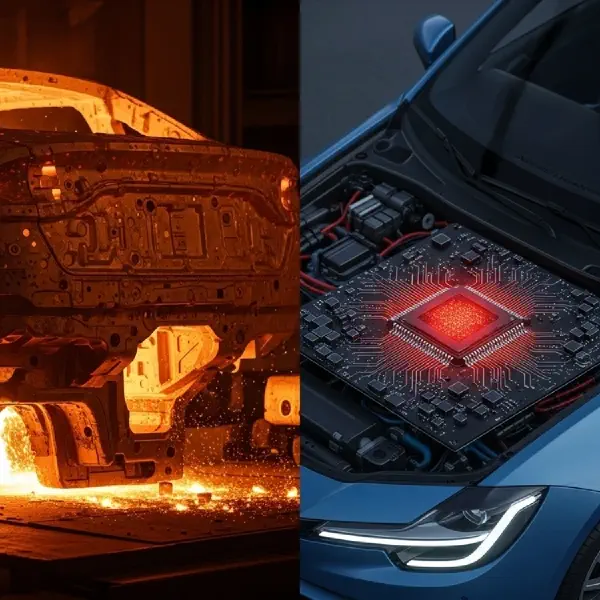
Modern innovations like gigacasting and centralized vehicle computers offer efficiency but introduce new single points of systemic failure and control.
The electric vehicle transition risks repeating these patterns through charging standard wars and software platform lock-in, unless diversity and interoperability are prioritized.
Cusumano, M. A., Mylonadis, Y., & Rosenbloom, R. S. (1992). Strategic Maneuvering and Mass-Market Dynamics: The Triumph of VHS over Beta. Business History Review, 66(1), 51-94.
Kenney, M., & Tanaka, H. (2001). The Rise and Fall of the Rotary Engine: A Study of the Failure of a Radical Innovation. IMVP Working Paper.
LeVine, S. (2015). The Powerhouse: Inside the Invention of a Battery to Save the World. Penguin Books.
MacDuffie, J. P. (2021). Innovation Pathways and Resilience in the Automotive Industry: From ICE to EV. MIT Sloan School of Management.
Thomke, S., & Feinberg, B. (2012). Design Thinking and Innovation at Tesla. Harvard Business School Case.
Fuchs, E. R. H., & Kirchain, R. E. (2010). Design for Location? The Impact of Manufacturing Offshore on Technology Competitiveness. Management Science, 56(12).
Congressional Research Service. (2017). The Volkswagen Emissions Scandal: Summary and Developments.
Helper, S., & Henderson, R. (2020). The Evolution of the Automotive Supply Chain. Brookings Institution.
Gawer, A., & Cusumano, M. A. (2014). Industry Platforms and Ecosystem Innovation. Journal of Product Innovation Management, 31(3).
Arthur, W. B. (1989). Competing Technologies, Increasing Returns, and Lock-In by Historical Events. The Economic Journal, 99(394), 116-131.
Analyzing the systemic fragility created by technological monocultures, innovation debt, and path dependence, with lessons for the electric vehicle transition.
Exploring the invisible frameworks of patents, standards, and supply chains that determine which automotive technologies succeed, using examples like the ICE ecosystem and charging standards.
Examining how technically superior automotive technologies like the Wankel rotary engine and EV1 failed due to ecosystem factors beyond engineering excellence.