Prosthetic Foot Project
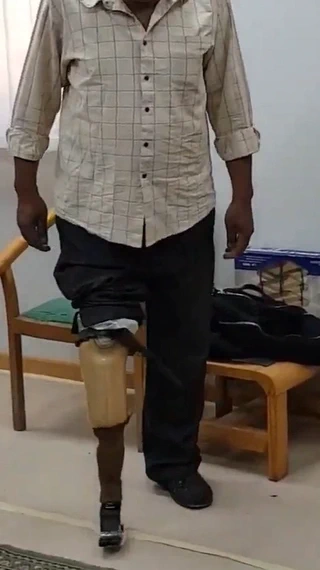 Cost-effective 3D printed prosthetic foot
Developing a Cost-Effective Prosthetic Foot for Below-Knee Amputees
Project Status: Completed (2019) | Award: Innovation Award for 3D Printed Carbon Fiber Prosthetic Limb
Abstract
This research addresses the critical need for affordable prosthetic devices in developing regions where traditional commercial prosthetics are prohibitively expensive. We developed an optimized, low-cost transtibial energy storage and release (ESAR) prosthetic foot using topology optimization, 3D printing, and carbon fiber reinforcement. The resulting design achieves approximately 60% cost reduction compared to commercial alternatives while maintaining comparable mechanical performance and functionality.
Problem Statement
- Commercial prosthetic feet cost between $500-$5,000+, making them inaccessible for many amputees in developing regions
- Traditional manufacturing methods are expensive and time-consuming
- Limited customization options for individual patient needs
- Need for locally manufacturable solutions that reduce dependence on imported devices
Approach & Methodology
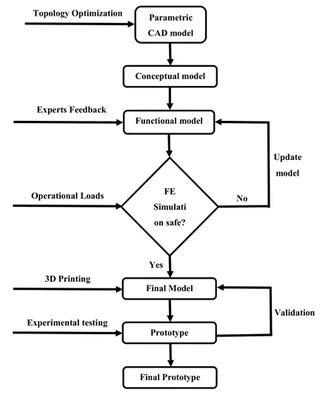
1. Design Optimization
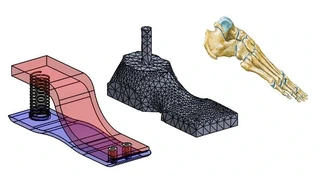
- Topology Optimization: Applied structural optimization techniques to identify optimal material distribution for energy storage and release during gait cycle
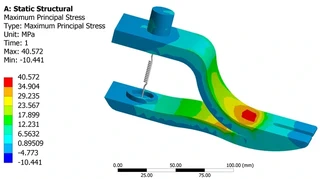
- Finite Element Analysis (FEA): Validated design performance under ISO 10328 loading conditions
- Design of Experiments (DOE): Systematic evaluation of design parameters to maximize performance-to-cost ratio
2. Advanced Manufacturing
- 3D Printing: Utilized additive manufacturing (FDM/FFF) for rapid prototyping and production
- Carbon Fiber Reinforcement: Integrated continuous carbon fiber reinforcement in critical load-bearing regions
- Material Selection: Evaluated multiple polymer materials (PLA, ABS, PETG, Nylon) for optimal strength-to-weight ratio
3. Testing & Validation
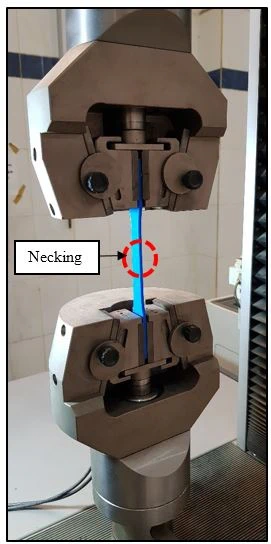
- Mechanical testing per ISO 10328 standards
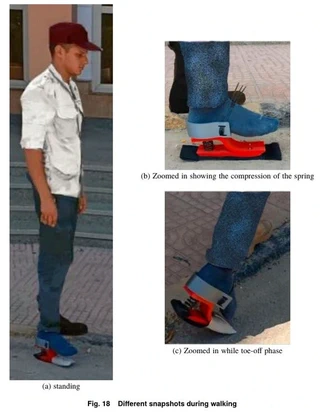
- Gait analysis and biomechanical evaluation
- Durability testing under cyclic loading
- User feedback and ergonomic assessment
Key Results & Achievements
Cost Reduction
- 60% lower cost than commercial alternatives
- Material costs: ~$50-100 vs. $500-5,000
- Locally manufacturable with accessible technology
Performance
- Meets ISO 10328 structural requirements
- Energy return comparable to mid-range commercial feet
- Lightweight design (comparable to commercial)
- Customizable for individual patient needs
Technical Specifications
| Parameter | Value |
|---|---|
| Weight | ~450-550g (depending on size) |
| Maximum Load | 100 kg body weight (ISO 10328 P4) |
| Energy Return | 65-75% (comparable to commercial ESARs) |
| Material | PLA/Nylon + Carbon Fiber |
| Manufacturing Time | 8-12 hours (3D printing) |
| Cost | ~$50-100 (materials only) |
Innovation & Impact
Technical Innovation
- First application of topology optimization + 3D printing + carbon fiber for prosthetic feet in regional context
- Developed design methodology that can be replicated for other prosthetic components
- Open-source design philosophy enabling local customization
Social Impact
- Enables access to prosthetic devices for underserved populations
- Reduces dependence on imported devices
- Creates opportunities for local manufacturing and employment
- Supports sustainability through reduced material waste
Publications & Presentations
Eltaher, Hisham, Omar Harraz, Khaled Azab, and Tamer Attia. “Developing an Optimized Low-Cost Transtibial Energy Storage and Release Prosthetic Foot Using Three-Dimensional Printing.” Journal of Engineering and Science in Medical Diagnostics and Therapy 3, no. 2 (2020). https://doi.org/10.1115/1.4046319
Eltaher, Hisham, Omar Harraz, and Tamer Attia. “Developing a Cost-Effective and Functional Prosthetic Foot for below Knee Amputees Using Topology Optimization and 3D Printing.” Volume 3: Biomedical and Biotechnology Engineering, IMECE2019, American Society of Mechanical Engineers, November 2019. https://doi.org/10.1115/imece2019-10616
Research Team
- Prof. Hisham Eltaher — Principal Investigator, Design Optimization & Manufacturing
- Dr. Omar Harraz — Biomechanics & Testing
- Dr. Khaled Azab — Material Science & Composite Integration
- Dr. Tamer Attia — Clinical Evaluation & User Testing
Gallery
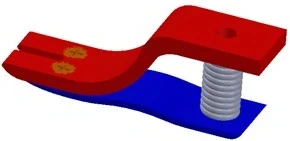
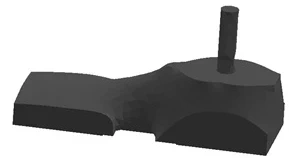
CAD Design & Optimization
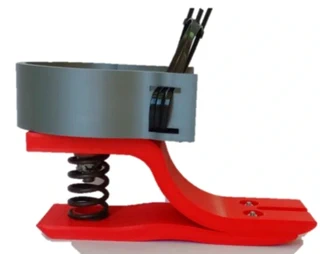
3D Printing & Manufacturing
Testing & Validation
Contact & Collaboration
Interested in collaboration, technology transfer, or clinical implementation? Contact hisham.Eltaher@mtc.edu.eg
